How We Decide Whether a Character Should Become Plush, Acrylic or a Badge
The best format is the one that preserves the character feature buyers must recognize while fitting the way the product will be used. Plush works when shape, softness and three-dimensional presence matter. Acrylic keeps printed color, linework and pose variety. A standee adds a display function. A badge suits a compact, front-facing graphic with a clear attachment plan. Before recommending any one of them, we review the artwork, intended use, handling, visible size, packaging and the decisions the buyer can realistically approve. Price or habit alone is not a reliable format-selection method.
Products in this category
Choose a product to review its specifications
Start with the character feature that cannot be lost
When a buyer asks us which product to make, we do not begin with a universal ranking of formats. We ask a narrower question: what must still be recognizable after the artwork becomes a physical object? For one character, the answer may be a rounded silhouette and a soft body. For another, it may be fine costume lines, a specific pose or a group of bright colors. A logo-like face may remain readable on a compact badge, while an off-center action pose may need the open area of an acrylic piece.
The intended use changes the answer. A plush may be held, displayed or used as a soft mascot object. An acrylic charm must hang in a stable direction and survive visual reduction. A standee needs to assemble, face the correct way and remain balanced. A badge must attach to the intended surface with its artwork facing correctly. Packaging also changes what is practical: a product sold on a backing card has different orientation and information needs from a display piece packed as separate parts.
We record which character features are protected, which will be simplified, and what the first proof or sample must answer. Actual MOQ, price and timing remain project-specific and require a current review.
A common buyer situation: one front-view drawing, four possible products
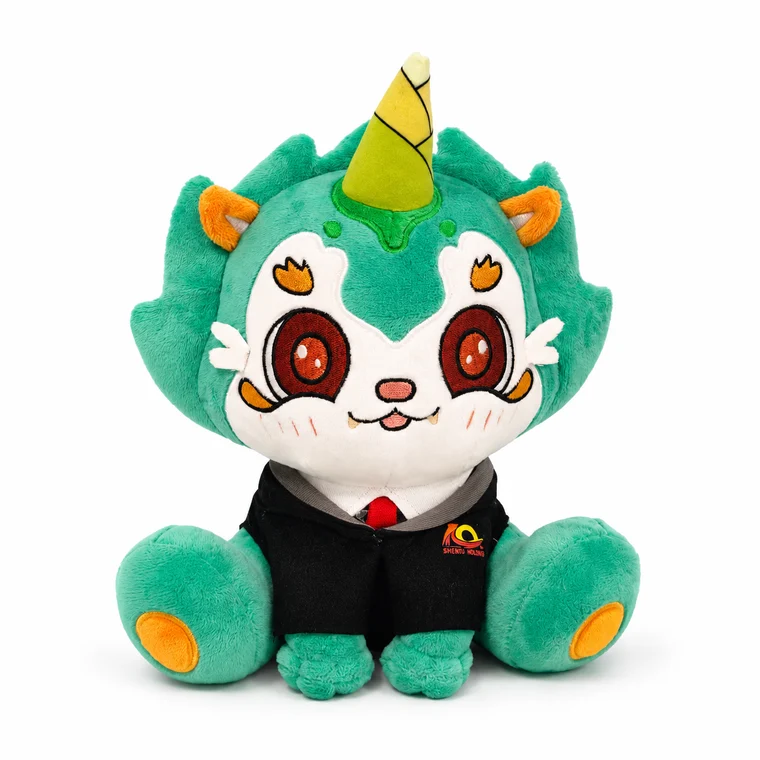
An anonymized plush-development record began with front-view character art. The buyer could see the face and costume, but the side and back interpretation, product use, packing and approval owner were still open. That image was enough to begin a design review, but not enough to assume a complete plush construction. The first useful step was to separate confirmed character features from decisions that a physical sample would have to resolve.
The same front view could also become acrylic or a badge, but it would create different questions. Acrylic could keep most of the printed front art, yet it would still need a cut outline, possible white support, hole position and hardware direction. A standee would need a base file and a fit decision. A badge might need the character cropped or simplified so the face and defining marks remain clear within a compact front area.
AIYYANG translates one source design into format-specific files and approval questions, then coordinates the specialist production route and quality references required for each product.
Choose plush when volume, softness and character presence carry the idea
Plush is a strong candidate when the character is recognized by its overall body shape, face, ears, hair, limbs or costume layers. It gives a flat design a physical volume and a soft interaction that a printed product cannot reproduce. That advantage also creates more interpretation work. The drawing does not automatically show side depth, back construction, seam placement, fabric direction or how a narrow feature should be supported.
We identify which features need volume and which can use embroidery, printing or an applied fabric part. Small marks may need to be combined at the chosen size, and long thin shapes may need another construction. Screen color must also be interpreted through available fabrics and decoration methods. These are production choices, not criticism of the original art.
The first physical sample should answer silhouette, balance, face position, material direction, decoration, attached parts and packaging questions. Photos can document the result, but touch, hidden construction and pack interaction still require the identified sample and specification. See custom plush development and our development process.
Choose an acrylic charm when printed art and pose variety should stay visible
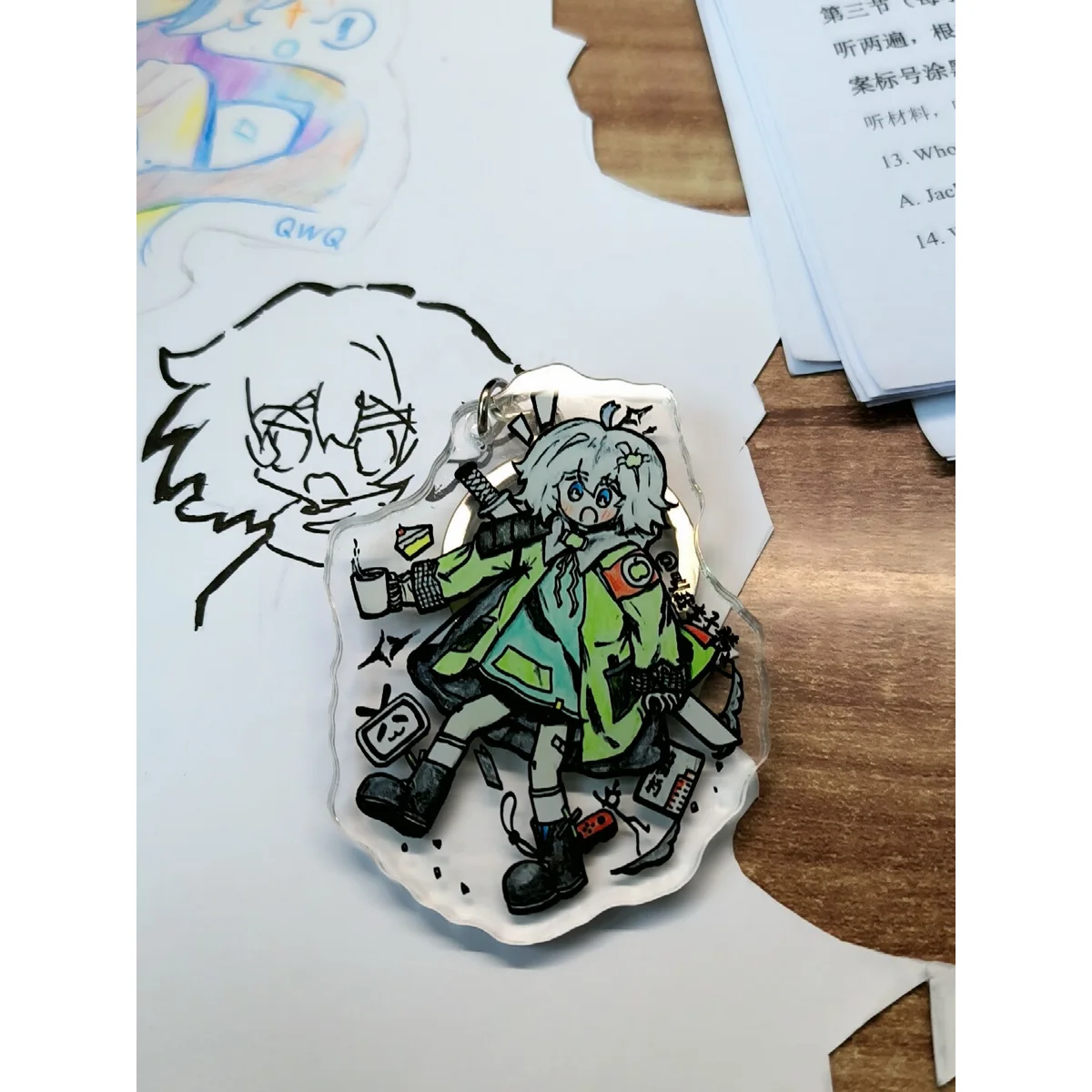
Acrylic works well when the character depends on linework, printed color, costume detail or a distinctive two-dimensional pose. It can keep more of the original illustration visible than a small sewn object, especially across a set of characters with different silhouettes. However, preserving artwork does not mean placing a file on a sheet and cutting around it without review.
Each design needs a controlled proof separating visible art, opacity support, cut line, hole and hardware. The outline must protect important features without an awkward border. The hole should avoid defining details, and the hardware should let the item hang correctly. Shared backing cards still require scale and pack orientation to be reviewed per design.
The real artwork-and-product image supports comparison of the source character with the printed, cut result. It does not prove the approved file version, material, dimensions, film or hardware. Those belong in the project proof and sample record. See our acrylic merchandise page.
Use a standee for display; use a badge for a compact wearable or attachable graphic
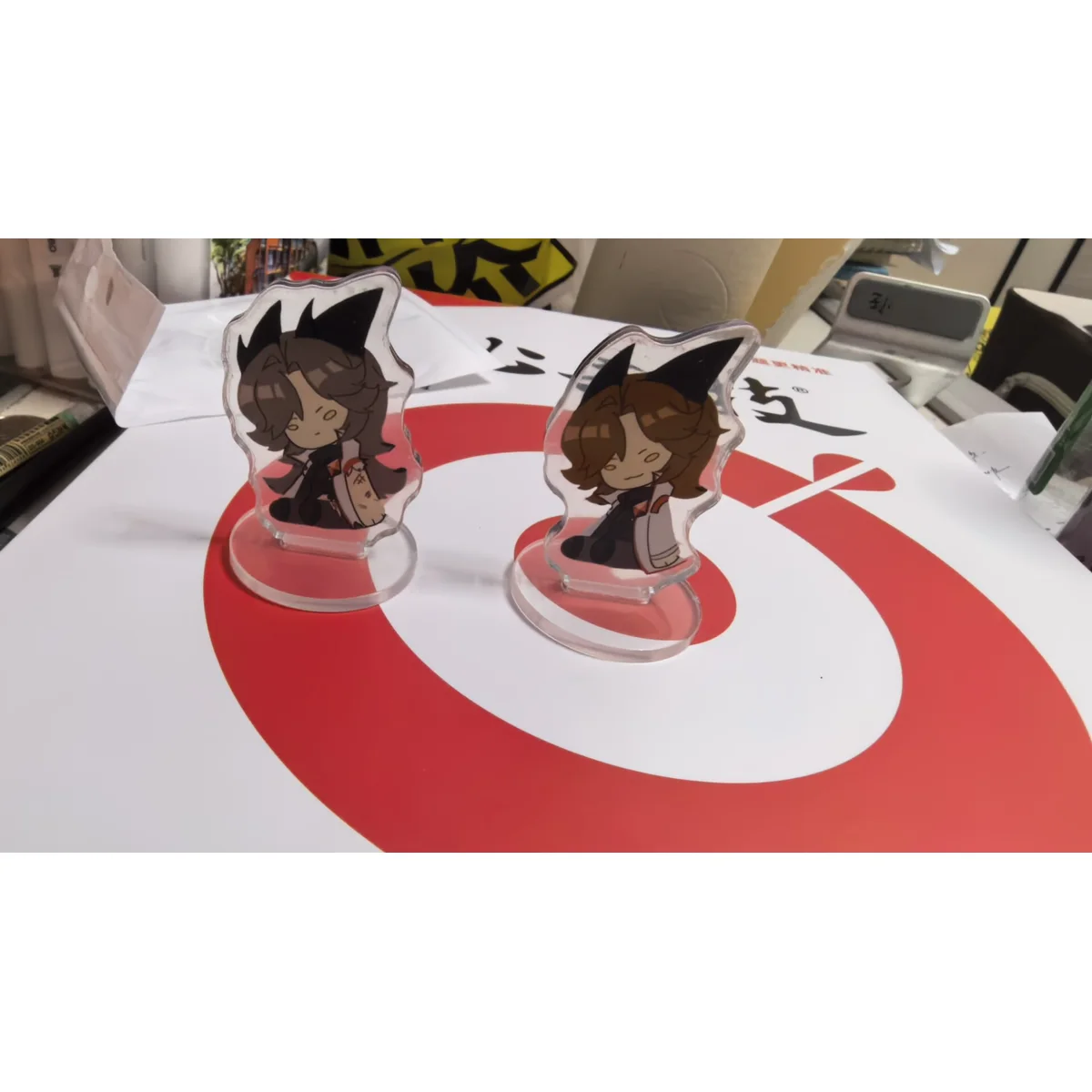
An acrylic standee is different from a charm even when both use printed acrylic. The character panel and base form one display system. An existing anonymized standee record involved several poses sharing one visual base style. Tall, wide and off-center outlines did not place weight over the base in the same way, so each character needed an assembled review for direction, fit, balance and pack contact. A still photograph can show the intended assembled state, but not how insertion, removal or repeated assembly feels.
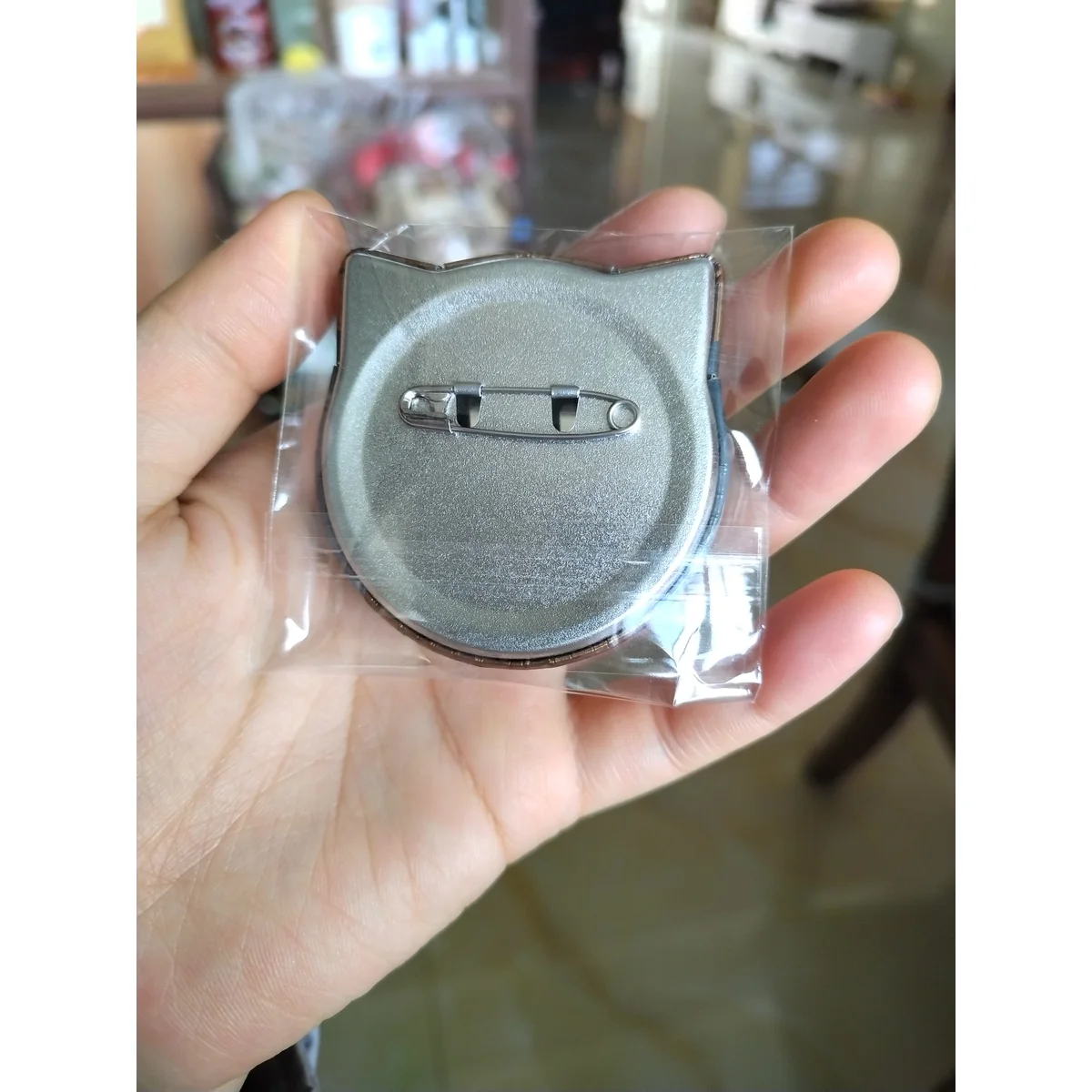
A badge works when the important idea can be read in a compact front-facing area. Faces, symbols, short graphic statements and cropped character art can fit this role. A full-body drawing with many fine details may become unclear unless the crop or composition changes. The back matters as much as the front for use: the shell, attachment orientation and individual protection should match how the item will be worn, displayed or packed.
The rear-view photo shows the attachment and shell of that item, not a universal specification. A current project needs one matched approval set for front, edge, attachment, orientation and packaging. See our pin and badge page.
One character can use several formats, but not one unchanged production file
Sometimes the correct answer is a small coordinated set rather than a single format. Plush can carry the character's physical presence, an acrylic charm can preserve a dynamic illustration, a standee can serve a display role and a badge can provide a compact graphic option. That approach is useful only when each item has a clear reason to exist. It should not become a list of formats added without considering artwork workload, approval capacity, packaging or quantity by SKU.
We keep the character identity consistent through selected anchors such as face proportions, key colors, signature accessories and the relationship between major costume areas. We do not force every tiny detail into every item. The plush file needs shape and construction views. The acrylic file needs print, opacity, cut and hardware layers. The standee needs a coordinated character and base file. The badge needs a readable crop plus front and back decisions.
Choose the physical product system that best fits the artwork first. For several characters or formats, use our football club mascot range planning guide to define launch roles and SKU groups.
Plan the proof, sample, QC and packaging around format-specific risk
Before sampling, define what evidence releases the next stage. Plush normally uses an identified physical sample with current artwork and specification. Acrylic uses a versioned proof for artwork, opacity, outline and hardware, followed by a physical check where needed. A standee is reviewed with its base; a badge joins front, edge, attachment and pack orientation.
Quality control compares the current stage with approved references. There is no one inspection method or tolerance for every product; useful checks depend on actual materials, decoration, construction, parts, use and packaging. A photo records a visible checkpoint but cannot prove hidden construction, measurements, testing, certification or consistency.
Packaging should be discussed before it becomes a late-stage decoration. It affects product orientation, protection, separate parts, backing cards, labels and how a buyer or fulfillment team identifies each SKU. AIYYANG can coordinate artwork versions, specialist suppliers, samples, QC references and packaging handoffs. The buyer remains responsible for authoritative market information such as required warnings, importer details and barcodes, supported where necessary by qualified specialists.
Common mistakes we see before a character format is chosen
Most format mistakes are visible before a quotation or sample if the team asks what information is missing. They become expensive when preference is treated as a complete production brief.
- Choosing the cheapest-looking format without checking whether the character's defining feature survives.
- Sending only a front view for plush and assuming the supplier will make the same side and back interpretation the buyer imagined.
- Using one flattened artwork file for plush, acrylic, standee and badge production.
- Keeping every fine detail even when the intended product size makes it unreadable or difficult to construct.
- Approving an acrylic image without confirming outline, opacity support, hole, hardware and hanging direction.
- Reviewing a standee character without assembling it with its actual base.
- Approving only a badge front and leaving the attachment direction or packaging open.
- Treating one approved design as approval for all characters in a set.
- Asking several buyer-side departments to send conflicting comments directly to different suppliers.
- Assuming a photo proves material, dimensions, testing, certification, bulk quality or commercial success.
What to send for a useful format recommendation
A complete final specification is not required for the first review. What helps is a clear separation between what is known and what remains open. We can then identify the format questions that must be answered before a reliable quote or sample plan is possible.
- Current character artwork and any available front, side and back views.
- The features that must remain recognizable, plus details that may be simplified.
- Intended use: held, hung, worn, attached, displayed or packed as a set.
- Preferred visible size or placement context, if already known.
- Priority characters and estimated quantity by design rather than one combined total.
- Packaging idea, separate parts, backing-card or label needs.
- Destination and required arrival situation, without assuming a shipping promise.
- The buyer-side person who will consolidate artwork, licensing, marketing and purchasing comments.
- Any open questions about material, hardware, testing, compliance, budget or timing.
- Reference samples or photographs, clearly marked as inspiration rather than approved specifications.
Start with the product-family overview if you still need to compare categories. When you are ready, send the character artwork for review and we will reply with the details still to confirm, appropriate supplier checks and a practical next step.
The same character problem looks different in each material system
Use these real product photographs to compare how shape, scale, materials, hardware and packaging change across formats. Specifications, quantities, schedules and testing requirements are confirmed for the actual project.
Direct answers about choosing a character product format
Should my character become plush or acrylic?
Choose plush when physical volume, softness and silhouette carry the character. Choose acrylic when printed color, linework and a two-dimensional pose should stay visible. Review use, size, packaging and approval risk before deciding.
Can one drawing be used for every product?
It can be the shared visual source, but not an unchanged production file. Plush needs shape and construction interpretation; acrylic needs print, opacity, cut and hardware layers; standees need a base; badges need a readable crop and back decision.
When is a character suitable for a badge?
A badge suits a compact front-facing graphic that remains readable after cropping or simplification. The rear attachment, orientation, edge and packaging also need approval.
What makes an acrylic standee different from an acrylic charm?
A standee is an assembled display product, so character outline, base slot, direction, balance, removal and packing must work together. A charm instead needs a controlled hanging point and hardware direction.
Do small details need to be removed?
Not automatically. First identify which details define the character. Some may be enlarged, combined, printed, embroidered or simplified according to the chosen format and physical scale.
Can several characters share the same approval?
They can share visual and packaging rules, but each SKU may still need its own scale, outline, construction, hardware, assembly and pack orientation reviewed.
Can you confirm MOQ, cost or production time from the artwork?
Not from the artwork alone. These depend on the current files, format, design count, size, materials, parts, packaging, supplier review and schedule, so they require a current project quotation.
What should I send first?
Send the available artwork, defining character features, intended use, preferred formats, quantity by design, packaging idea, destination and required arrival situation. Mark uncertain items as open rather than guessing.
Send the character artwork and tell us how the product should be used
AIYYANG can compare plush, acrylic, standee and badge options, translate the selected artwork into format-specific decisions, coordinate specialist suppliers and keep sample and QC approvals traceable. We will identify what is known, what needs a proof or sample and what requires current project confirmation.