1. Decide who is buying and where the product will sell
“Our supporters” is too broad for a first purchasing decision. A parent choosing a gift for a young fan, a regular supporter adding something to a matchday purchase and a collector looking for a distinctive club item may want different things. Identify the situation your shop already sees or wants to test. Use your own transaction history, staff observations and actual supporter questions where available; do not treat a general football search trend as proof of demand for your proposed product.
The channel changes the brief. A shop counter can explain a character and show its feel. An online listing must communicate scale and details through photographs. Matchday sales may need quick recognition and easy handling. We start by asking where the item will sit, how the fan will encounter it and what would make that fan choose it.
2. Give each proposed item a clear job
Build the comparison around roles before materials. A main mascot product can carry the character story; a smaller accessory can offer an easier addition to another purchase; coordinated packaging can support a gift occasion. These are possible roles, not a rule that every club must order all three.
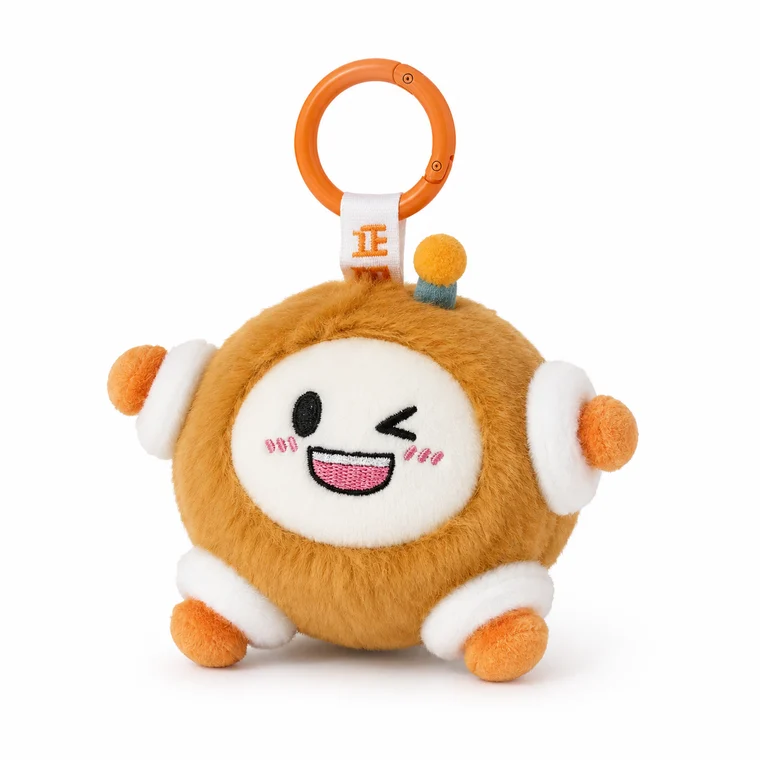
A plush may be suitable when shape, expression and touch are central. An acrylic charm or pin may suit a graphic treatment of approved club assets. A smaller format is not necessarily cheaper to develop or more profitable: artwork adaptation, hardware, finishing and packing can change the comparison. Put your shortlist beside the available product formats, then remove anything that has no distinct use. Two products answering the same need can tie up budget without creating a clearer choice for supporters.


3. Compare margin on the complete selling unit
Start with the selling price your retail team believes is credible, then check the cost of getting a sale-ready item into stock. Include the product, required labels, individual presentation, assembly, relevant development costs and delivery costs. Clarify which costs are provisional and how taxes or import charges are treated. This is a comparison worksheet, not a promised margin.
Keep unit contribution separate from total profit. An attractive margin on each sold piece does not remove the cost of unsold stock, discounts, payment fees or the club's retail overhead. Equally, spreading a sample or setup cost across an assumed repeat order can make the first order look better than it is. Our cost discussion helps separate recurring and initial costs. Compare alternatives on the same quantity and packing basis before selecting the lowest unit price.
4. Limit variants before asking for a larger order
Every additional pose, kit colour, size or dated version creates another stock decision. A range that looks modest on a presentation slide can become many separate quantities when production and packing are specified. Ask how much of the budget each variant uses, whether it needs its own sample and what happens if one sells more slowly than the others.
For an initial order, we suggest distinguishing essential recognition from optional variety. A current kit may be important to the club, while several nearly identical poses may be optional. Avoid adding a season or event date unless it serves the brief, because it can affect the item's usefulness later. This does not guarantee that an undated item will sell. Review the MOQ and SKU split together, including whether future replenishment would require a fresh quotation or material review.
5. Test a small range on paper before committing
Consider a planning example, not a reported client result: a club has a limited launch budget, an approved mascot and a small shop display. It is choosing between one mascot plush with simple presentation and several accessories with separate designs and backing cards. The plush option concentrates recognition and development in one item; the accessory option spreads the budget across more approvals and stock lines. Neither is the automatic winner. Compare total launch cost, display fit, approval effort and the stock the club can reasonably hold.
Our Wuhan Three Towns case publicly shows different plush formats and retail packaging. It helps buyers see that size and presentation are separate decisions within a range. The photographs do not establish sales performance or mean another club should copy the same assortment.
6. Agree what the first commitment must prove
Before a bulk order, specify what you need to learn from development: whether the mascot is recognizable at the proposed size, whether the price comparison is complete, whether the package fits the display and whether the delivery plan supports the launch. Set a decision point after the relevant proof or sample rather than letting a shortlist quietly become a production instruction.
Share a preferred direction and an alternative with us. We can identify the artwork, sample and packaging questions needed to compare them. The club retains the final retail decision. If timing is fixed, use the launch and receiving-date discussion alongside the budget review; a product that needs more unresolved development may not fit the same plan as an already-defined item.
Questions before you order
What is the safest first product for a football club shop?
There is no universally safest product. Start with a recognizable club asset and a buying situation you can explain, then compare complete cost, approval effort and stock exposure. Your own sales and supporter feedback are stronger guides than an unsupported claim that one format always sells.
Should we choose the product with the lowest purchase price?
Only after comparing the same scope. A low price may exclude packaging, accessories or development. It may also produce an item that does not fit the shop's selling price or display. Assess the complete selling unit and the money committed to the whole order.
Can we combine several designs to make a small first order?
We can review the proposed split, but a combined total does not automatically meet each design's production requirements. List the quantity and specification of every SKU. The feasible arrangement and current MOQ must be confirmed for the actual products.
Can you tell us which merchandise will deliver the highest margin?
We can help compare quoted product, development, packing and delivery costs. The club must supply its selling-price assumptions and relevant retail costs. We cannot promise margin or sell-through without that information, and even a complete calculation is not a sales guarantee.
What should we send if we have a budget but no product list?
Send the club assets available, intended buyers, sales channel, budget scope, launch priority and destination. Tell us whether the budget includes samples, packing and delivery. We can then discuss a focused shortlist and the information still needed for a comparable quote.