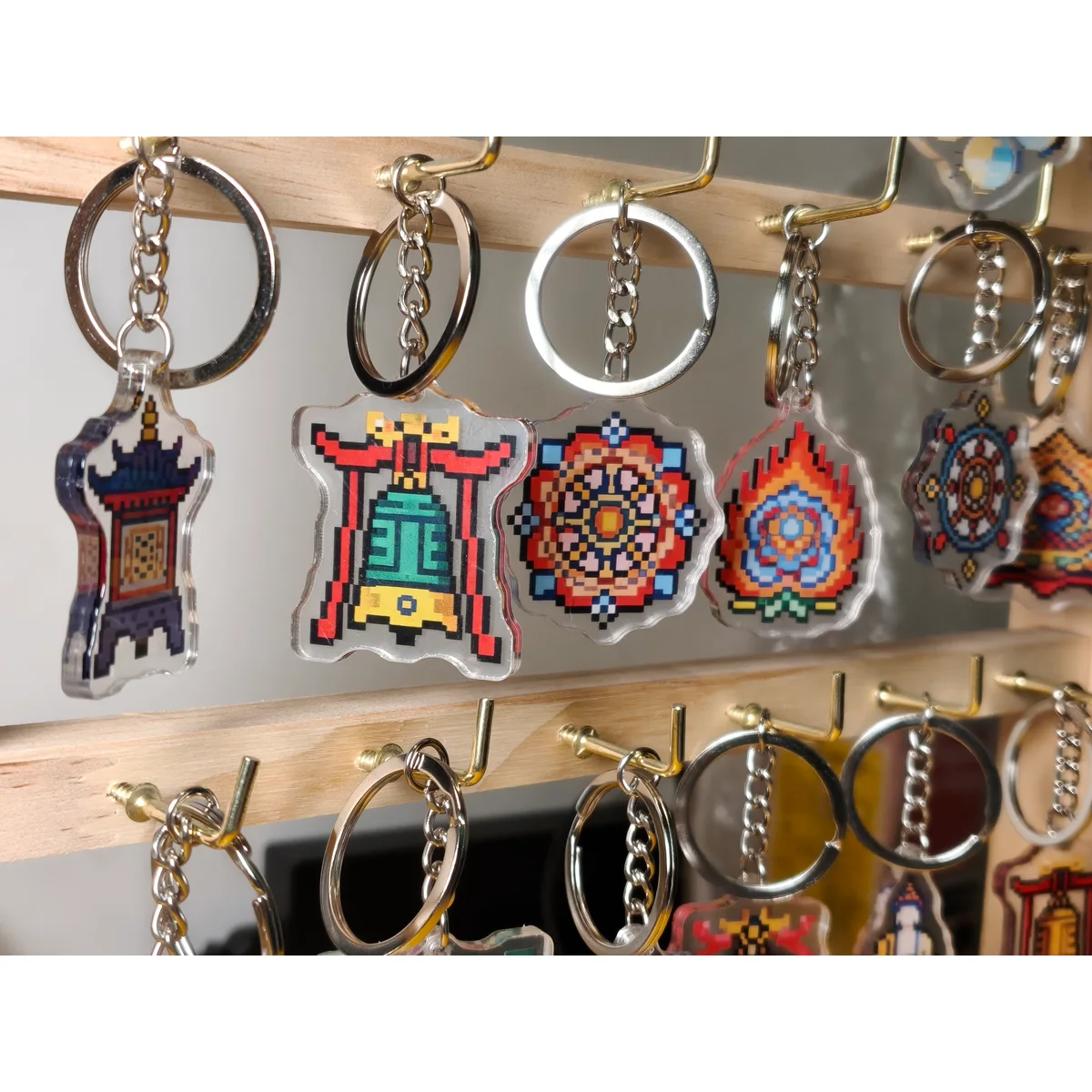
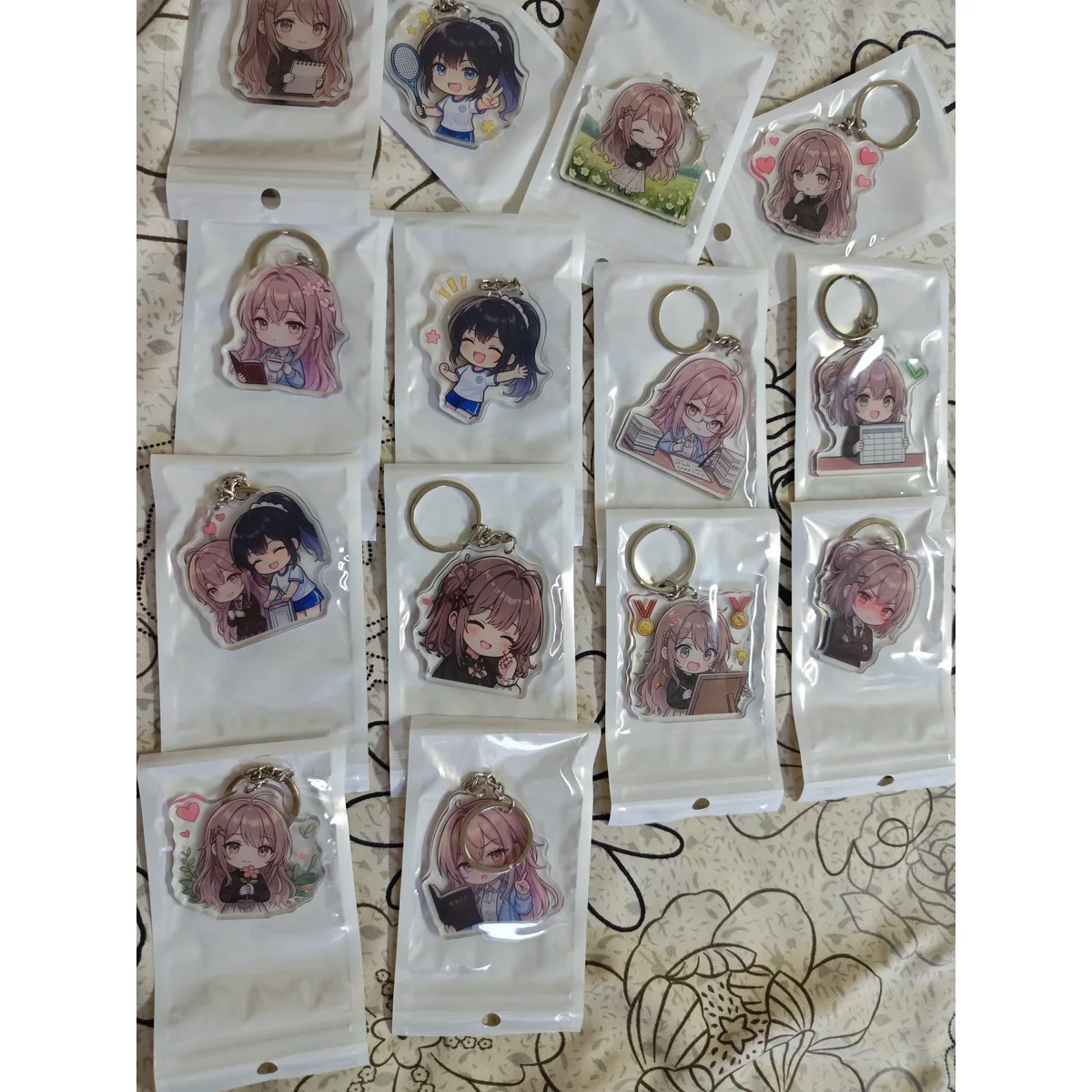
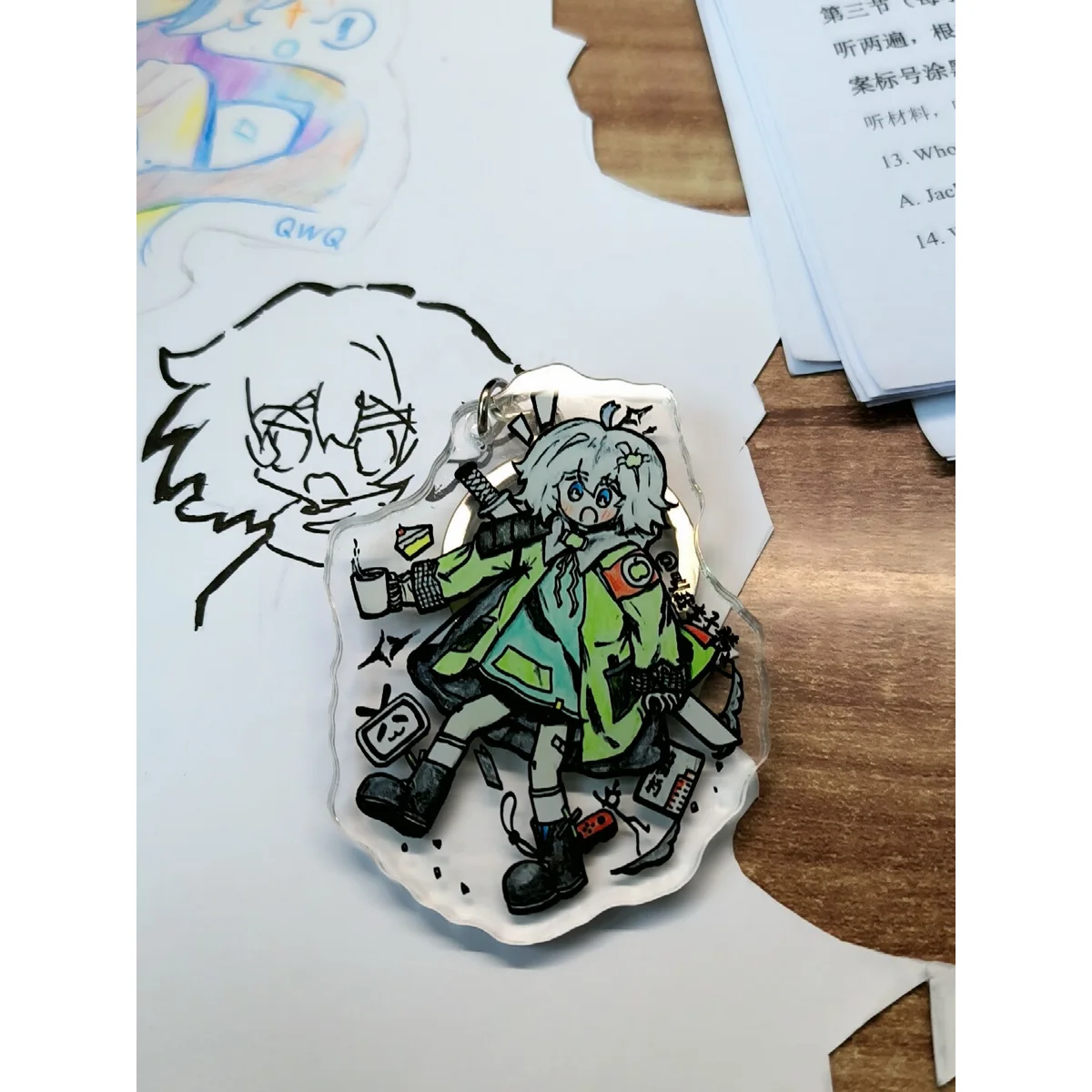
This matters most for character merchandise. A small shift in the outline can change the silhouette. A hole placed without checking balance can make a character hang sideways. Pale artwork can lose contrast against a dark bag or backing card. None of these questions can be settled by asking whether the original illustration is attractive. They require a production proof that connects the visible design to the physical product.
Why one finished picture is not a production file
The artwork buyers send us usually describes what customers should see. The production file also needs to describe how that image will be printed, cut, assembled and presented.
We therefore separate the review into layers. The exact layer names can differ by production partner and printing method, but the decisions stay consistent:
- the visible front artwork and its final scale;
- any back artwork, mirrored image or intentionally blank back;
- areas that should appear opaque and areas intended to remain transparent;
- the outer cut outline and its relationship to important artwork details;
- the hole or connector position;
- the selected ring, chain, clasp or other approved hardware;
- orientation marks, labels and packaging instructions.
Our first response identifies the artwork and product details still to confirm. We check the intended product size, number of designs, viewing direction, use, sales channel, hardware, packaging and destination. Any item that is still open stays marked as open until the buyer approves it.
A recurring multi-design problem: one collection, different hanging results
One recurring situation involves a set of character designs prepared for the same collection. The buyer wants the keychains to feel consistent on one display card. The digital files may all use the same canvas size, yet the characters occupy that canvas differently. One pose is tall and narrow, another is wide, and a third includes a long prop or raised arm.
If the same visual scale and hole rule are applied without review, the finished pieces can look inconsistent. A narrow character may appear much smaller than a wide character. A connector placed at the highest point may pull one design to the side. A shared backing card may leave one item centered and another visibly low.
We do not solve this by forcing every outline into the same dimensions. We compare the intended visual scale, outline, connector position and pack orientation design by design. Then we keep the collection rules that should remain consistent, such as hardware family, label treatment, card format or approved presentation direction.
Each SKU gets its own proof for scale, outline, connector position and packing, while sharing the collection’s approved hardware and presentation rules.
How transparency and opacity change what customers see
Clear material takes on the color and contrast of its surroundings. A pale area that reads well on a bright approval screen may look weaker against a dark backpack, retail card or display fixture. An effect that appears transparent in the illustration may need support if the buyer wants the color to remain visible in different settings.
During proof review, we ask the buyer to confirm which areas are intentionally clear and which should look solid. This decision belongs to the visible product, not only to the print operator. A production team can prepare an opacity-support layer, but it should not guess which transparent effects are part of the character design.
We also review small light-colored text, highlights and border effects. The issue is not simply whether the file has enough resolution. The final product size, surrounding clear area, cut outline and background all affect whether those details remain readable.
For retail or event merchandise, the packaging background is part of this review. If a charm will sit against a printed card, the card can improve contrast or compete with the art. If it will be displayed without a card, the design may be seen against many different surfaces. Buyers should decide which presentation is most important instead of approving the proof only on a white screen.
The cut outline, connector point and hardware must be reviewed together
The outer shape protects the character silhouette, but following every small projection can create an awkward edge. A strand of hair, narrow weapon, thin tail or isolated effect may need more surrounding space, a simpler outline or a different connector position. The goal is to preserve recognition without turning fragile-looking details into production problems.
The connector point also changes how the finished item hangs. Its position affects balance, spacing from the art and the relationship between the acrylic part and the metal component. Hardware has its own size and movement, so it cannot be treated as a decorative choice added after the outline is approved.
Our review order is practical:
- confirm the character silhouette and intended finished visual size;
- identify narrow projections, internal gaps and important border details;
- draw or review the cut outline around those areas;
- place the connector point with the expected hanging direction in mind;
- check the selected hardware against the available space;
- review how the complete item sits in its package or display.
When a design needs an adjustment, we show the reason in the proof. “Move the hole” is not enough if the new position changes the top of the character or interferes with the artwork. The visual file and production-control layer should be approved together.
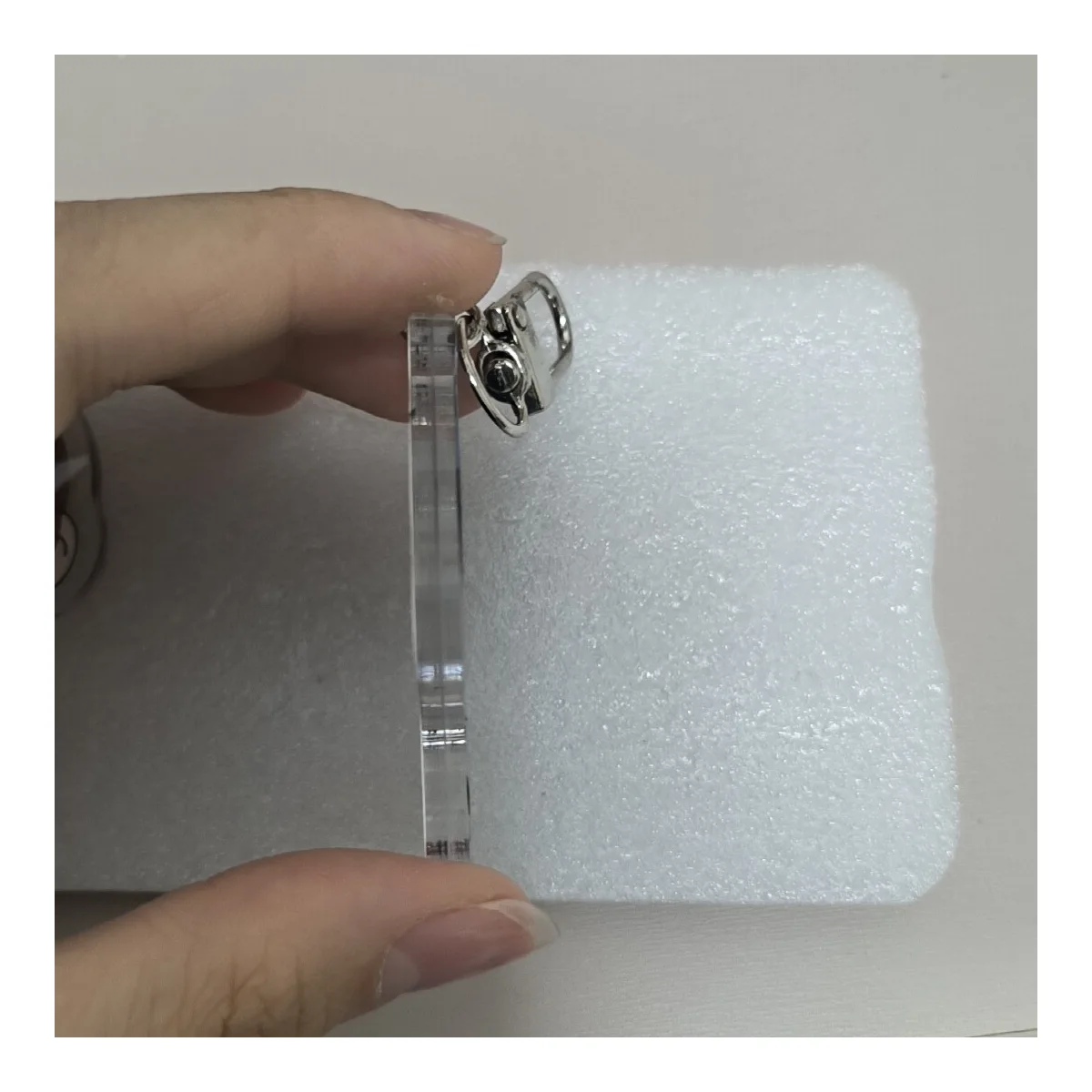
Front, back and reading direction should never be assumed
An acrylic keychain can show one image, a mirrored image, separate artwork on each side or a deliberately plain back. The correct choice depends on how the item will be viewed and how the character, logo or text should read.
Text and asymmetrical graphics make this especially important. A simple mirror may reverse a word or move a signature to the wrong side. Separate back artwork may require different alignment from the front. Even when the buyer wants the same character on both sides, the proof must show the intended orientation rather than leaving the production team to infer it.
We record the approved front and back relationship in the same version as the cut outline and connector point. If the buyer later changes the pose, logo or direction, the complete proof should be updated. This prevents a new front file from being combined with an older back or outline.
Why proof version control matters before sampling
Many production errors begin as document errors. Several people may send files through email, messaging apps and shared folders. One file changes the color, another moves the logo, and a third updates the cut shape. Without one approved version, every file can appear reasonable while the combined product is wrong.
We use a clear version reference for the approval set. Comments are consolidated, the current file is identified, and superseded files should no longer be treated as active. Buyer approval should cover the visible artwork and the production layers that belong to it.
A physical sample can then test what the proof cannot show fully: the printed appearance on the selected material, cut edge, surface condition, assembled hardware, hanging behavior and packaging fit. The sample is not a substitute for a controlled proof. It is the next control point.
When the buyer requests a change after seeing the sample, we classify whether it affects only presentation or changes a production layer. A packaging note may update the pack specification. A different outline, color treatment, connector point or front-back arrangement requires the proof version to change as well.
We confirm sample and production dates after reviewing the files, number of designs, revisions, materials, hardware, packaging, quantity and current supplier schedule.
What we check before the approved file becomes a QC reference
QC needs a comparison standard that can be seen and understood. For acrylic keychains, the relevant points normally come from the approved proof, approved sample where used, and packing specification.
The review may include:
- visible scale and relationship to the approved artwork;
- front and back direction;
- clarity of important printed elements;
- intended clear and opaque areas;
- cut outline and edge appearance;
- connector position and hardware assembly;
- surface condition, including distinguishing removable protective material from damage where applicable;
- correct design, label and packaging combination;
- orientation and SKU separation in the packed order.
Not every project has the same critical point. A logo-heavy event item may prioritize reading direction. A character collection may prioritize consistent visual scale. A retail pack may prioritize card alignment, barcode placement and the first view customers see. We identify the project-specific risks instead of promising an unsupported universal tolerance or inspection standard.
AIYYANG coordinates the approved artwork and samples with the production partner and quality checks. Printing, cutting, hardware assembly and packing responsibilities are confirmed for the actual project.
Packaging is part of the acrylic specification
Packaging does more than prevent surface contact. It determines how the hardware sits, which side faces the customer, whether protective material needs an instruction, how designs are separated and how labels are applied.
An individual protective bag can suit a distribution program, but a retail project may also require a backing card, hanging feature, barcode or SKU label. A multi-design order may need clearly separated inner packs so a fulfillment or event team can identify each design without opening every unit.
We ask about the sales channel before final pack approval:
- Will the item be sold individually, included in a gift set or distributed at an event?
- Does the buyer need a backing card, insert, label or removal note?
- Which side should face outward?
- Must different designs be packed or labeled separately?
- Will a warehouse or fulfillment team require carton and SKU identification?
- Could the selected hardware press against the printed surface during transport?
These questions can change card dimensions, bag size, orientation and carton organization. They should be settled before the bulk goods are waiting to be packed.
Common mistakes we see in acrylic keychain approvals
- Approving only the visible picture. The cut outline, opacity, connector point and back direction remain unresolved.
- Using one rule for every design in a collection. Different poses can need different scale and hanging decisions.
- Reviewing transparency only on a white screen. Pale details may behave differently against the intended card, bag or display.
- Adding hardware after the outline is final. The connector can affect balance, spacing and pack orientation.
- Allowing several active file versions. A new artwork file can be combined with an old outline or back image.
- Treating protective material as either always present or always absent. Surface protection and removal instructions must follow the actual specification.
- Leaving packaging until bulk production is complete. Card fit, label position and SKU separation may then require avoidable rework.
- Requesting a generic price without design count and packaging. The team cannot responsibly review the production and pack structure from one image alone.
Direct answers about acrylic proofing
Why is the connector hole part of artwork approval?
Its position changes the hanging angle, space around the artwork and visual balance. It also needs to fit the approved hardware and package. For that reason, we review the connector point with the cut outline rather than adding it after the visual proof is finished.
Does one approved design approve the whole collection?
No. A collection can share hardware, packaging and presentation rules, but each design still needs its own visual scale, cut outline, connector position, front-back direction and pack orientation checked.
Do I need a physical sample after approving the digital proof?
A physical sample is useful when the buyer needs to confirm printed appearance, edge, surface, assembled hardware, hanging behavior or packaging fit. The appropriate sample plan depends on the design count, change risk and buyer approval needs.
Send the production questions with your artwork
AIYYANG helps brands, IP owners and their authorized merchandise agencies develop acrylic keychains and related character merchandise. Our work covers artwork review, proof coordination, sampling decisions, supplier coordination, quality-control references, packaging and delivery planning.
Send the artwork and the decisions you have already made. We will identify what is still missing before the proof can become a production specification. Contact us through WhatsApp, email aiyyang866@gmail.com, or upload your project brief.
Upload your design
See how AIYYANG reviews artwork, opacity, cut lines, connector position, hardware, proof versions, QC and packaging before acrylic keychain production.