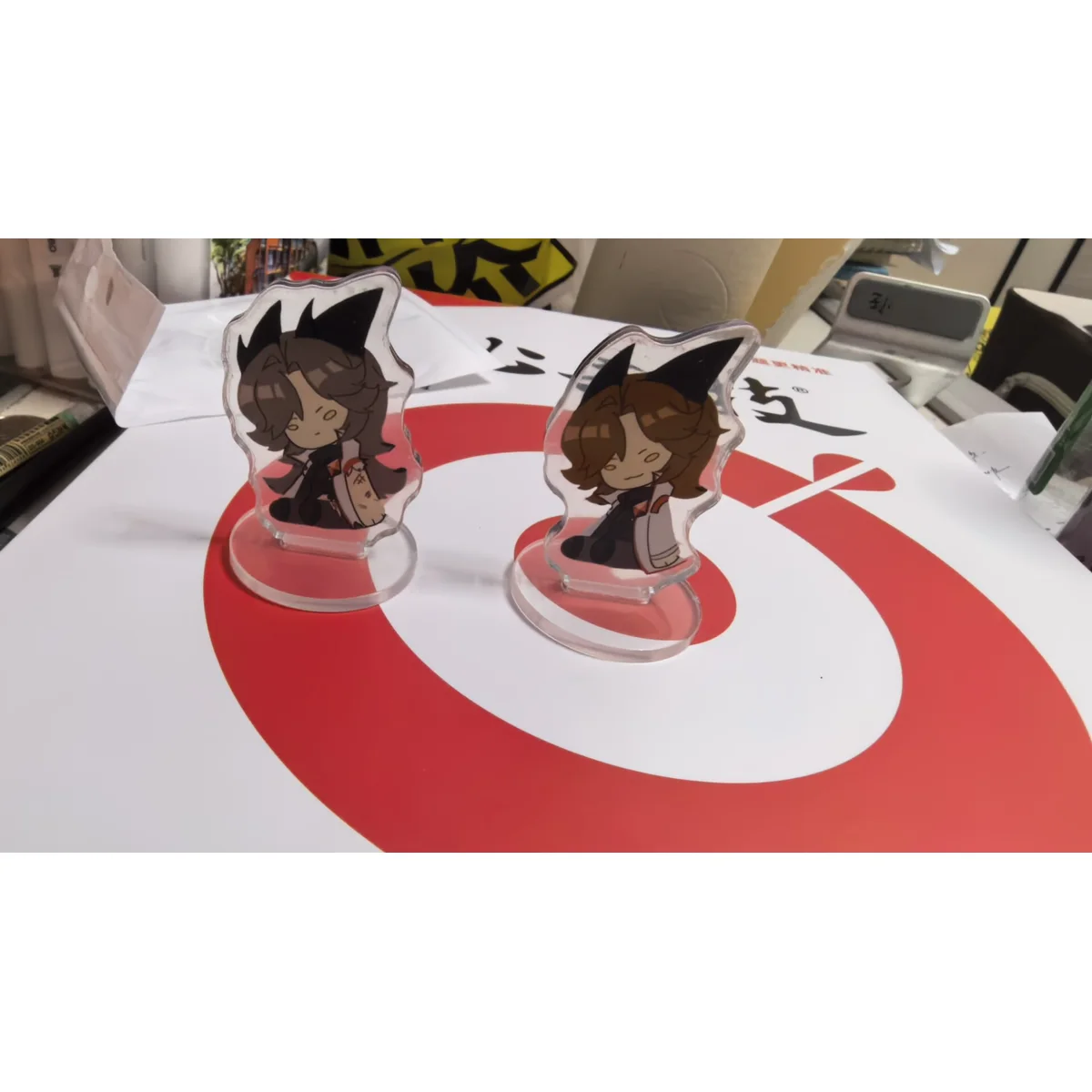
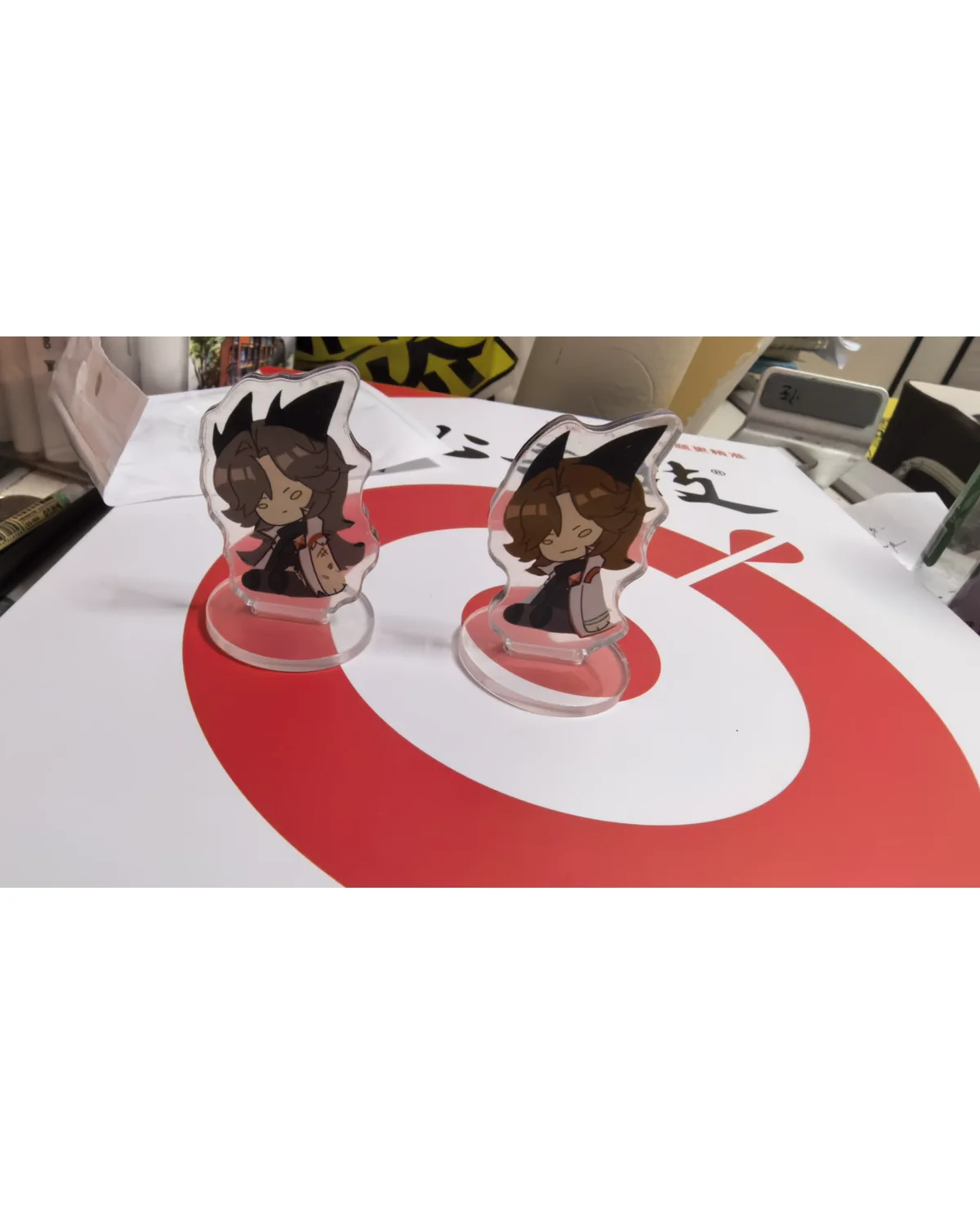
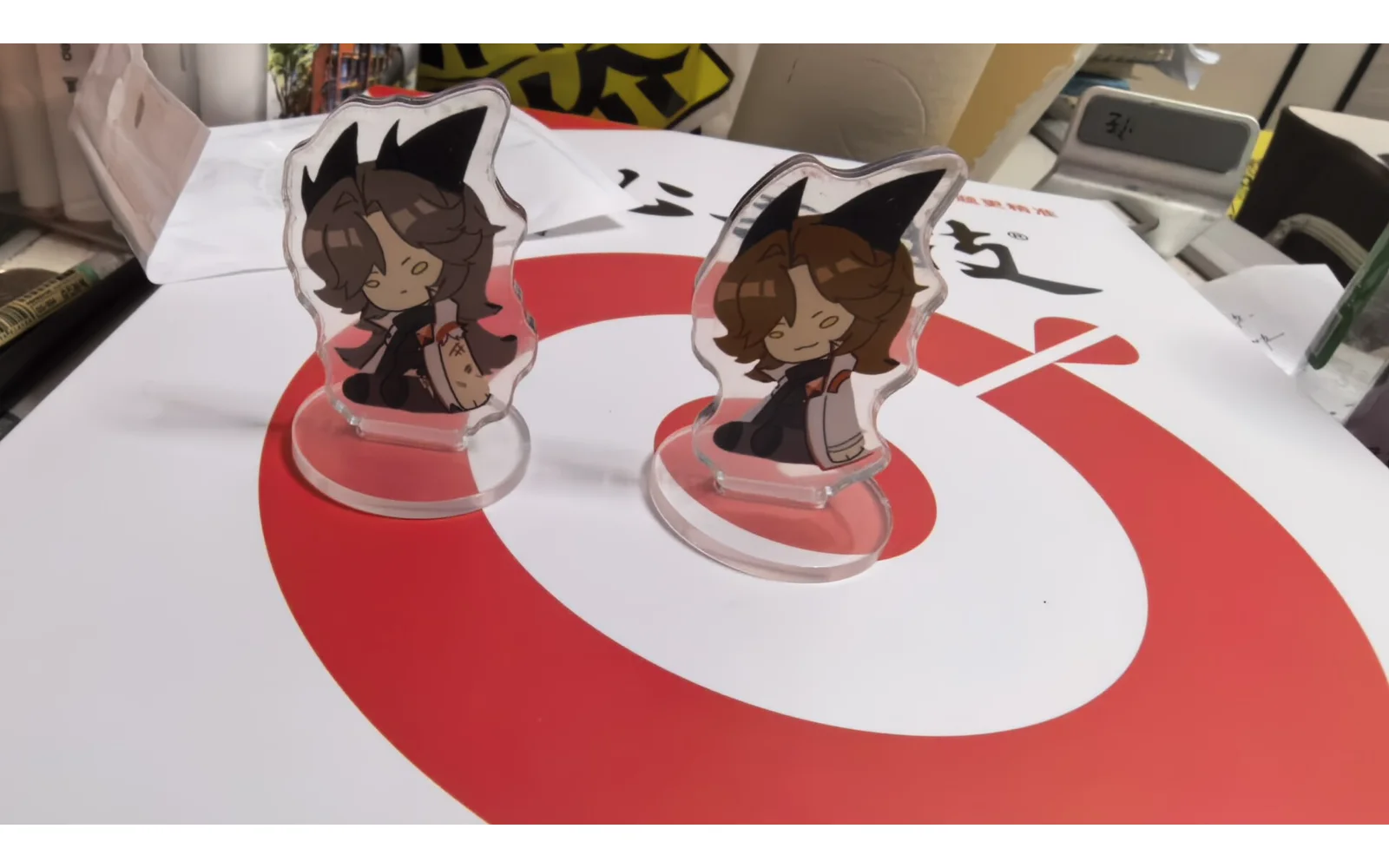
We see this most clearly in multi-character collections. A buyer may want every item to share the same visual base, logo position and retail format. Yet one character is tall, another leans to one side, and another carries a wide prop. Their files belong to one collection, but their balance and support needs are different. Our job is to coordinate the artwork, proof, sample, supplier instructions, quality checks and packing reference so each design follows the collection system without being forced into a shape that does not suit it.
Review the character panel, slot and base together
A digital illustration describes the character. It does not automatically describe how the finished product will stand. Before a sample is made, we turn the visual idea into a controlled product specification covering:
- the finished viewing direction and intended visual scale;
- the outer cut outline and the lower connection area;
- the relationship between the character panel and the base opening;
- the base outline, artwork, logo direction and clear or printed areas;
- the assembled footprint and expected display setting;
- the approved method for inserting and removing the panel;
- the packaging arrangement for the panel, base and any printed insert;
- the file version that production and QC must follow.
These decisions are connected. Moving a slot can change the balance. Changing the base outline can change the available print area. Adding a large transparent extension can alter the apparent scale and the way the product sits in a pack. We therefore approve the assembly, rather than signing off two separate pictures and hoping they fit later.
A recurring buyer situation: one collection, different balance problems
A common project starts with several character designs intended for one launch. The buyer wants a consistent base family so the products look related on a shelf. The artwork files may even use the same canvas. In physical form, however, the designs behave differently.
A tall character places more visual and physical weight above the base. A wide pose may extend beyond one side of the support area. A long accessory can shift the center of gravity away from the body. A small character placed on an oversized base may stand securely but look out of proportion with the rest of the set. The shared style is useful, but it cannot replace an assembled review of every SKU.
Our practical approach is to keep the collection rules that should be shared and test the decisions that must remain design-specific. Base color, logo treatment, label style and packaging family can be consistent. Cut outline, connection position, support area and packed orientation still need to be confirmed for each character.
We review the lower artwork area before drawing the connection
The most important production question is often hidden near the character's feet. The lower silhouette must provide enough usable area for the connection without cutting through a face, logo, costume detail or important outline. A character that floats, sits, has no visible feet or ends in a narrow point may need a thoughtful transition between the art and the support area.
We first identify what must remain visually recognizable. Then we review where a connection can sit without making the character look as if part of the illustration was accidentally added. If the original pose leaves too little usable area, possible responses include adjusting the surrounding outline, changing the support geometry or asking the buyer to approve a small artwork adaptation. The correct response depends on the design; it is not a standard edit applied to every file.
Very small projections and internal gaps also deserve attention. We mark them in the production proof so the buyer can approve the physical interpretation, not only the source illustration. Our acrylic product overview explains the related decisions around clear areas, printed areas and cut shapes.
Slot fit must be approved by assembling and removing the sample
A slot that looks aligned in a drawing can still behave differently in the physical sample. We ask the sample review to cover insertion, seated position, visible gaps, lean, unintended movement and removal. The buyer should know whether the product is intended to be assembled once, assembled by a retailer, or repeatedly assembled by the final customer, because those use cases can lead to different judgments about the experience.
We do not publish one universal slot tolerance. Fit can be affected by the selected material, actual production process, surface treatment, panel and base geometry, and the supplier's validated setup. A useful approval is therefore a physical result plus a controlled file reference, not an isolated number copied from another design.
If insertion is difficult, simply increasing the opening is not always the right response. A wider connection may introduce movement or make the product lean. If the connection is too tight, forcing the panel can damage an edge or make the customer experience frustrating. We ask the production partner to identify the cause, revise the relevant file or process setting, and return the assembly for confirmation.
Review balance across the character and base
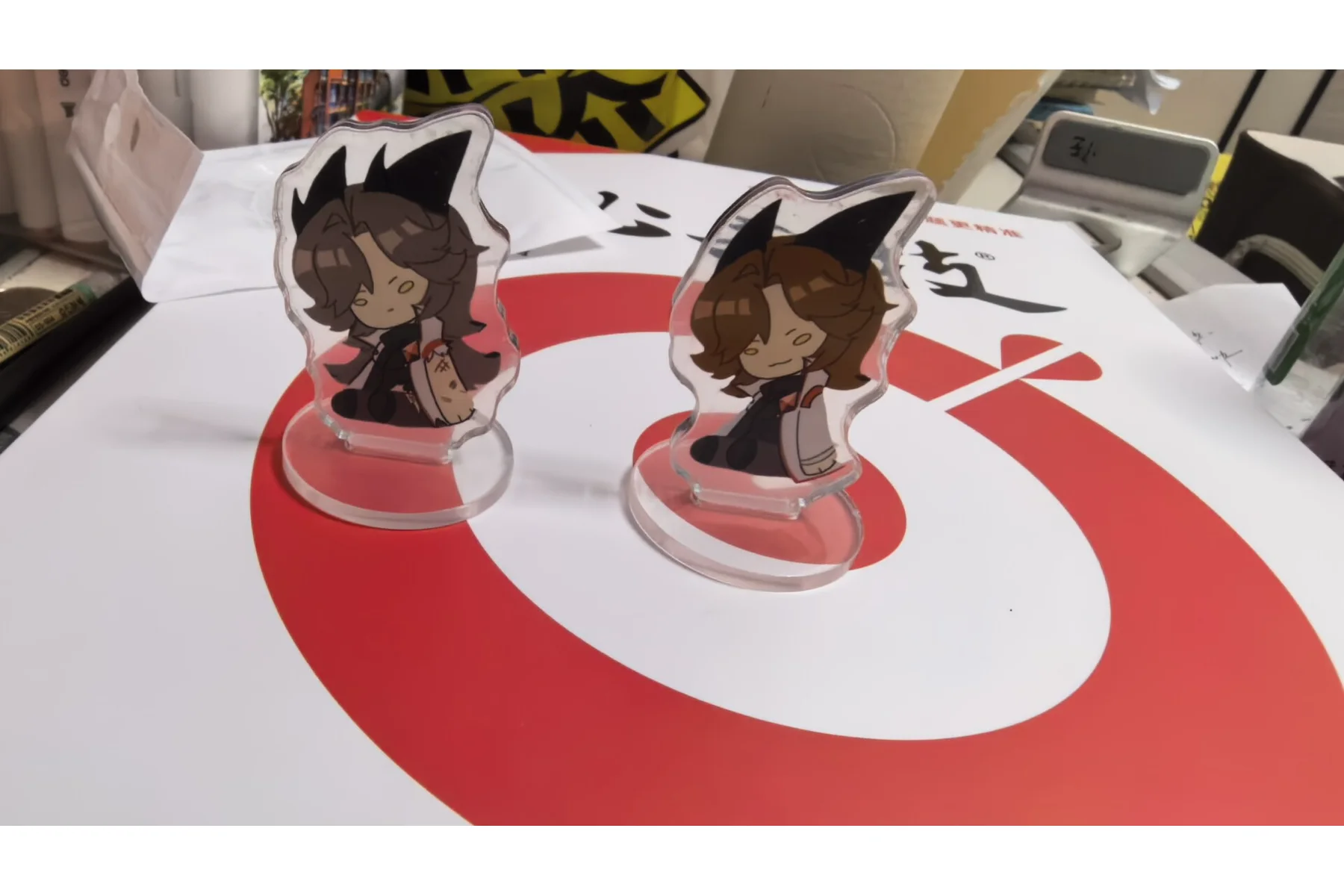
Buyers sometimes ask whether a thicker material will solve a balance problem. It may change the behavior of a particular design, but it does not replace a review of the complete geometry. The character height, width, asymmetry, support position, base footprint and display environment all matter.
We prefer to examine the base relationship before treating any single material choice as the solution. Questions include:
- Does the support area sit under the character's effective center of gravity?
- Does a wide prop extend much farther on one side?
- Is the base footprint appropriate for the character's proportions?
- Does the connection allow the character to seat in the intended orientation?
- Will the standee be displayed on a stable shelf, used at an event or shipped for customer assembly?
- Does the packaging protect the shape without pressing on a vulnerable edge?
This review prevents a false sense of security. A heavy-looking base can still be poorly positioned, while a visually lighter base may work when its geometry suits the pose. We rely on the assembled sample and the approved use case instead of making a general claim from appearance alone.
Base artwork and front direction belong in the production proof
The base is part of the merchandise design. It can carry a logo, character name, series mark, event message or a deliberately clear area. These elements must be reviewed at their actual relationship to the seated character.
Text creates an obvious directional requirement. Even without text, an asymmetrical print or shaped base may have a front. We show the approved panel orientation, base orientation and artwork relationship in the same proof. Where the buyer wants a set to form a scene, the relative position of multiple standees or bases should also be communicated clearly rather than inferred during packing.
Transparency requires a real-world check as well. Pale colors and fine details can appear different against the base, retail insert, shelf or background. We ask which areas are intentionally clear and which need solid visual support. The production partner can prepare the technical print layers, but the buyer must approve the intended appearance.
What we check on the physical sample
The sample turns file decisions into observable evidence. We compare it with the approved proof and review the complete assembled product. Depending on the design, the check may include:
- character scale, silhouette and visible cut relationship;
- print placement, intended clear areas and front-back direction;
- panel edge and base edge condition under normal viewing;
- insertion and removal experience;
- seated position, visible lean and unintended movement;
- balance on the intended type of flat display surface;
- logo direction and the relationship between base art and character;
- panel-to-base pairing for every design in the collection;
- packed orientation and separation between contacting hard parts;
- agreement between the current sample, proof and packing note.
The result is not recorded as a vague approval such as “looks good.” We identify what was approved and what remains open, including whether a visual change also affects the cut outline, balance, base, packing or production reference. Timing is reviewed from the actual files, design count, change scope, packaging and supplier schedule rather than posted as a fixed promise.
Packaging must protect two hard parts and explain assembly
The character panel and base can rub, press or move against each other if they are packed without separation. A sleeve, divider, fitted compartment or another approved protection method may be appropriate depending on the surface, retail presentation and shipping plan. The right pack is chosen from the actual parts, not from a generic product photo.
If the correct front direction is not obvious, a simple assembly illustration can prevent complaints. For a collection, the packing reference should also show which panel, base, insert and label belong together.
Before export packing is approved, we ask about sales channel, individual pack, carton handling, destination and any buyer-specific labeling requirements. A retail shelf, event giveaway and direct-to-customer parcel can require different presentation and protection decisions. Our project examples show why packaging is treated as part of product development rather than a last-minute addition.
Common mistakes buyers can prevent early
The most avoidable errors usually begin before the sample:
- approving a character image without approving the assembled base;
- applying one connection position to every pose in a collection;
- using a shared canvas size as proof that every character has the same physical balance;
- treating a fixed material thickness as the answer to every stability question;
- forgetting to mark the front of a printed or shaped base;
- reviewing color and surface appearance without understanding protective film;
- sending revised art without updating the cut, base or pack reference;
- packing the panel and base together without checking contact and movement;
- omitting an assembly cue when the customer must orient the parts;
- asking for a quote without the number of designs, intended size, pack concept or destination.
Use a clear brief, record each approval and keep one current sample and specification for everyone working on the order.
Direct answers about standee fit and packing
Can one base design be used for every character in a collection?
A shared visual base can create consistency, but every character still needs an assembled balance and fit review. Different poses, widths and props can require design-specific support or connection decisions even when the logo and base style remain consistent.
How do you approve the slot fit?
We review a physical sample by inserting, seating and removing the character panel. The check covers alignment, visible gaps, lean, unintended movement, orientation and the intended customer assembly experience. The approved result must match the current production file.
Should the character panel and base be packed separately?
They should be protected so hard surfaces do not rub or move in a way that damages the approved appearance. Depending on the parts and retail format, this may involve a sleeve, divider or fitted compartment. The method is decided from the actual project.
Turn the artwork into an approval set suppliers can follow
AIYYANG helps brand, creative, retail and procurement teams and their agencies develop physical merchandise. For acrylic standees, we connect the character art to the base, sample, supplier instructions, QC reference and packaging plan. Our role is merchandise development, supplier coordination and quality control.
If you are planning one character or a full collection, send the project brief, contact us on WhatsApp, or email aiyyang866@gmail.com. Include the files you already have and mark any open decisions. We will explain which artwork and product details still need to be confirmed.
Send your standee project
Learn how AIYYANG reviews acrylic standee artwork, base fit, balance, sample assembly, QC and packing as one controlled merchandise specification.