Backing cards and sleeves
Backing cards and sleeves for hanging displays, product information and barcode labels.
Packaging is not a decoration added at the end. Product protection, retail presentation, labels, assembly, carton size and freight should be considered while the product can still be adjusted.
Choose a product to review its specifications
A box should be approved with the product inside and the intended handling route in mind. We recommend separating what the fan sees, what protects the product and what the receiving team needs to identify the goods. These requirements can overlap, but they are not interchangeable. Start by identifying the sales channel and the exact handover point, then define what the packed sample needs to demonstrate.
A product going to a retail shop may need shelf visibility and an individually identifiable unit. An online order may need additional protection outside the retail pack. A matchday distribution point may prioritise clear sorting and a simple handover. We ask which of these routes is actually included rather than assuming one attractive box will perform every job.
State whether AIYYANG is preparing products for your warehouse, a retail location or another nominated receiver. If your team will repack or add materials locally, record that step. For mixed gift sets, the collection planning page explains why set assembly needs a separate specification.
A window, insert or tie should not force the mascot into a pose that hides the face or compresses important features. We recommend reviewing the actual product in the proposed pack, including how it is inserted and removed. For products with metal hardware, check where the hardware rests and whether it can contact an adjacent printed or soft surface.
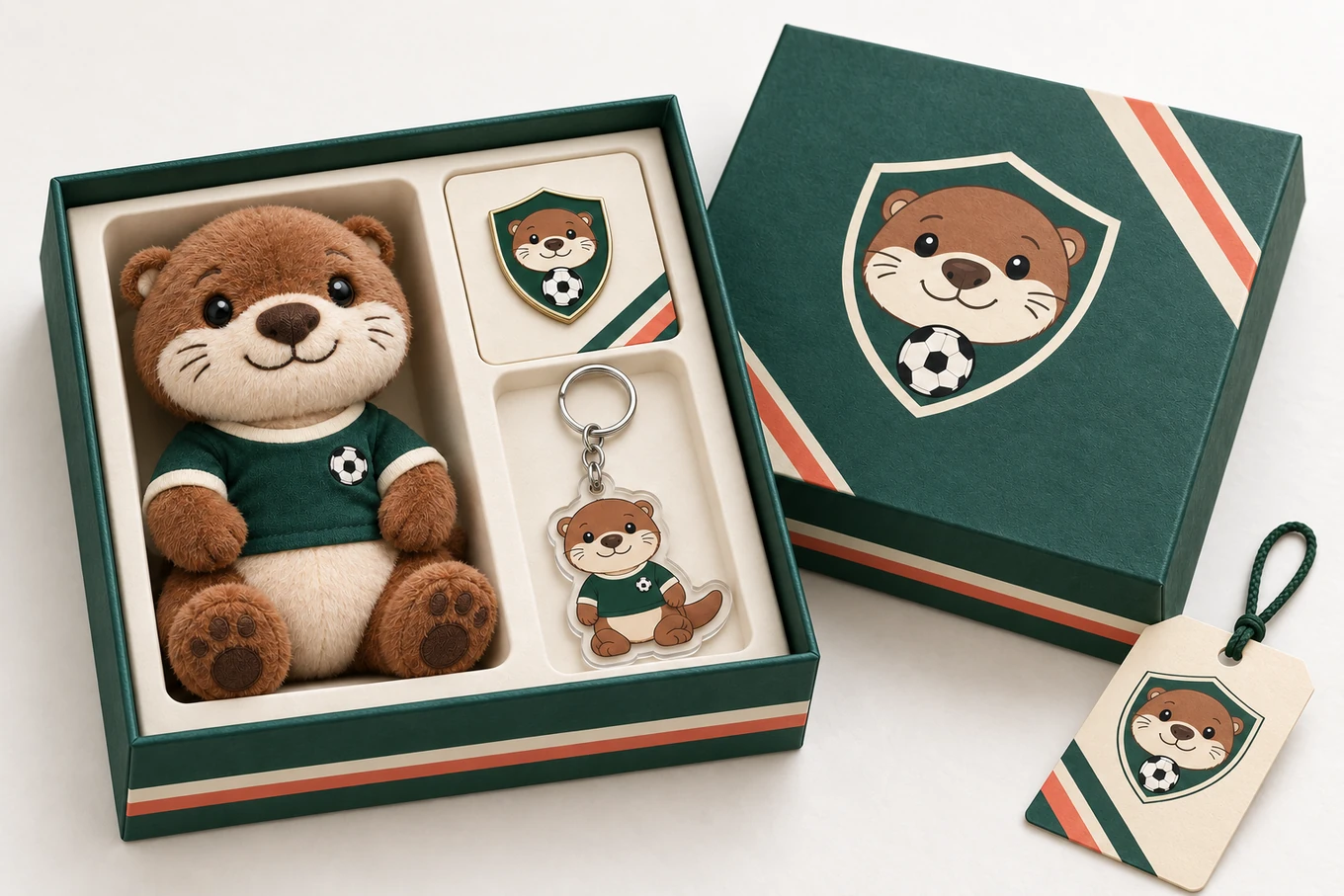
The Wuhan Three Towns case shows round-head and full-body mascot products in printed retail boxes. The visible evidence supports comparison of presentation and product format. It does not show that both products use the same dimensions, inserts or transport protection, so those details must be confirmed for a new project.
List product name, SKU, barcode, brand marks, required notices and any destination-specific text. Identify who supplies and approves each element. We recommend checking the final printed position, not only the design file: a fold, window, adhesive area or hanging point can obscure information that looked clear on screen.
If your project requires a barcode, ask the responsible retail team to confirm the intended identifier and acceptance method. Do not invent the code or assume that a visual check proves it will be accepted by the receiving system. Any legal or market-specific wording should come from the responsible buyer or qualified adviser; our review coordinates the supplied requirements.
Agree what needs to be checked physically: fit, product orientation, opening, closure, component count and the proposed pack-out sequence. If a transport test is required, confirm the relevant test plan and acceptance criteria before describing the pack as tested. The existence of a boxed sample does not establish a test result.
We recommend keeping photographs of the approved arrangement alongside the packaging version and product reference. A later change to size, accessory position or pack contents can affect that approval. Connect any unresolved item to the sample and production workflow so that a print approval is not mistaken for approval of the complete pack.
The receiving team needs to identify what is inside, compare quantities with the packing list and separate versions without opening every retail unit. Agree the carton identification and packing arrangement with that team. For a mixed range, distinguish loose products, complete sets and any separate printed components.
Carton dimensions, weight and the chosen delivery route influence logistics review; they should come from the actual pack-out proposal and confirmed shipment information. We do not infer freight charges or a delivery promise from a box rendering. Send your product, sales channel, required packaging information, destination and receiving date through the packaging RFQ, with unresolved requirements clearly marked.
Do not assume so. Review its role in the actual delivery route and confirm whether another protective layer is required; the appearance of a retail box does not establish its transport suitability.
The buyer should identify the team responsible for the identifier, required wording and acceptance method. We coordinate the approved content and its position on the pack, while unresolved legal or market-specific wording stays pending.
Review changes that affect the product fit, protection, printed information, contents or packing sequence. A previously approved drawing does not automatically cover a different product size, accessory location or set configuration.
Backing cards and sleeves for hanging displays, product information and barcode labels.
Box structures selected according to value, opening experience, quantity and shipping limits.
Paper, pulp, foam or other supports that hold the real product without pressure or abrasion.
Multi-product packs, inner cartons and export cartons planned around assembly and delivery.
A rendering is not enough; trays and closures need approved dimensions and tolerances.
Scratch, moisture, compression, movement and protruding parts require different layers.
Artwork, barcode, warnings, language and SKU responsibility must be clear before print.
Pack-out steps, carton count, weight and volume can outweigh the box-material difference.
A dieline can look correct while the product moves, rubs, compresses or faces the wrong direction after assembly.
Use the approved product dimensions and any normal production variation to set internal space. Inserts should hold the item without hiding important features or placing pressure on fragile parts.
Record the order for folding, inserting, labeling, closing and SKU matching. A complicated pack can add labor, create orientation errors and affect the production schedule even when the material is simple.
Units per carton, gross weight and volume follow the finished pack. A larger retail box can change delivered cost more than a small saving in board or printing.
Tell us the artwork, intended use, quantity by design, packaging and receiving date. We will confirm the workable format, sample route and quotation basis.
You do not need a finished technical pack. Send what is available and mark unknown items clearly.
We review the artwork, use, size and quantity before planning the sample. Once the sample is approved, the written specification guides production, QC, packing and delivery.
Discuss this productOften yes. Printed cards, boxes, trays, labels and specialty materials can each have setup and purchasing conditions.
They can share a structure when dimensions and protection are compatible, while inserts, artwork and labels may remain product-specific.
No. Early packaging review can reveal dimension, protection, assembly and freight problems before they become expensive.
Send the artwork, expected quantity, target market and timing. We will review the size, materials and packaging, then confirm what is needed for a quotation or sample.