
AIYYANG is a merchandise development, supplier coordination and quality-control team. We do not present AIYYANG as the owner of every production site involved in a project. We review the brief, organize open decisions, coordinate suitable specialist resources and connect the approved sample and specification to bulk-production checks. The actual supplier arrangement is confirmed for the current project.
A manufacturer label does not explain how the project will be controlled
The phrase “custom plush toy manufacturer” can describe very different commercial and operational arrangements. One company may communicate directly with a production site. Another may coordinate pattern, embroidery, clothing, labels or packaging across specialist resources. A buyer cannot understand responsibility from the label alone.
We therefore look for evidence of project control. Who owns the current artwork? Who identifies missing views or unclear details? Who converts the character into a pattern and decoration plan? Who consolidates sample comments? Who decides when a revision needs another physical sample? Who holds the final approved files? Who checks bulk goods and pack-out against that approval?
When evaluating a proposed plush production route in China, check who reviews the artwork, who defines the sample questions, how revisions become a bulk standard, and where material, packaging, inspection and delivery responsibilities change hands.
One evaluation brief should go to every candidate
A recurring review situation begins when a buyer receives several quotations for the same character. The prices appear easy to compare, but the underlying assumptions are different. One quotation may use a simple material and basic packing. Another may include clothing, labels, a more complex decoration plan or sample work. Inspection and delivery responsibility may end at different points.
Before comparing commercial terms, we normalize the request. Every candidate should receive the same confirmed information and the same list of open decisions:
- the current artwork version and the person authorized to approve changes;
- front, side and back information where available;
- target finished size and intended use;
- design count and quantity range by design;
- material, color, decoration, clothing and accessory preferences;
- label, hangtag and individual packaging expectations;
- destination market and relevant use context;
- the required-use or launch priority, without turning it into an unverified production promise;
- any existing sample, quotation or supplier information that must be reviewed.
If a detail is unknown, we mark it as open. This is better than allowing each supplier to make a different hidden assumption. A fair comparison begins with comparable scope.
Artwork review tests whether the production team asks the right questions
Flat artwork is not a complete plush specification. A production partner must interpret silhouette, thickness, balance, seam positions, filling, fabric direction, facial placement, clothing and attachments. Some details can be embroidered. Others may need appliqué, printing, a sewn component or deliberate simplification.
The important signal is not whether a supplier immediately says “yes.” It is whether the review identifies the decisions that affect recognition and construction. A character with a large head and small feet may need balance decisions. A thin line may not work as a separate sewn part. Layered clothing can change the body pattern and packing volume. A wide or unusual silhouette may affect seam layout and how the product sits.
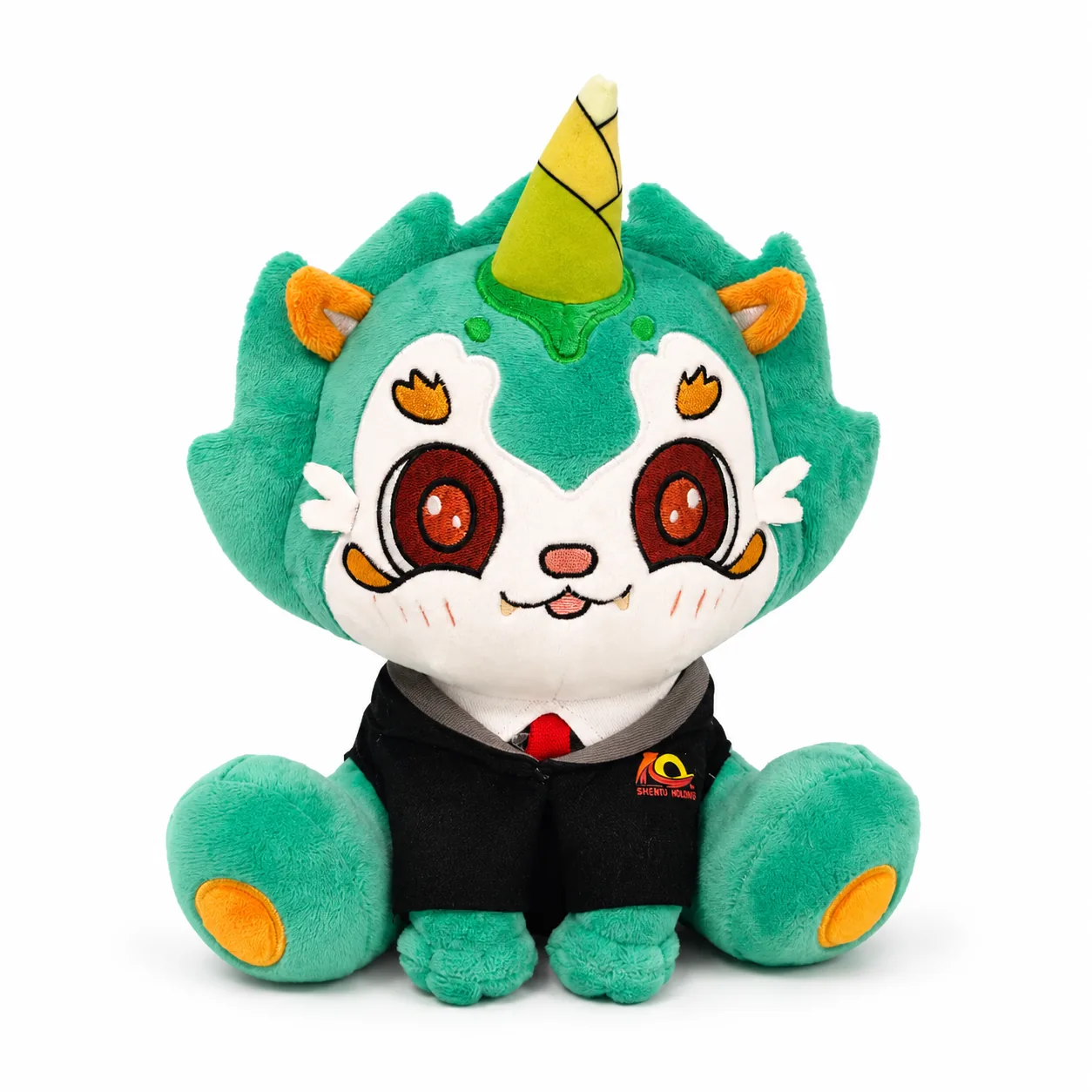
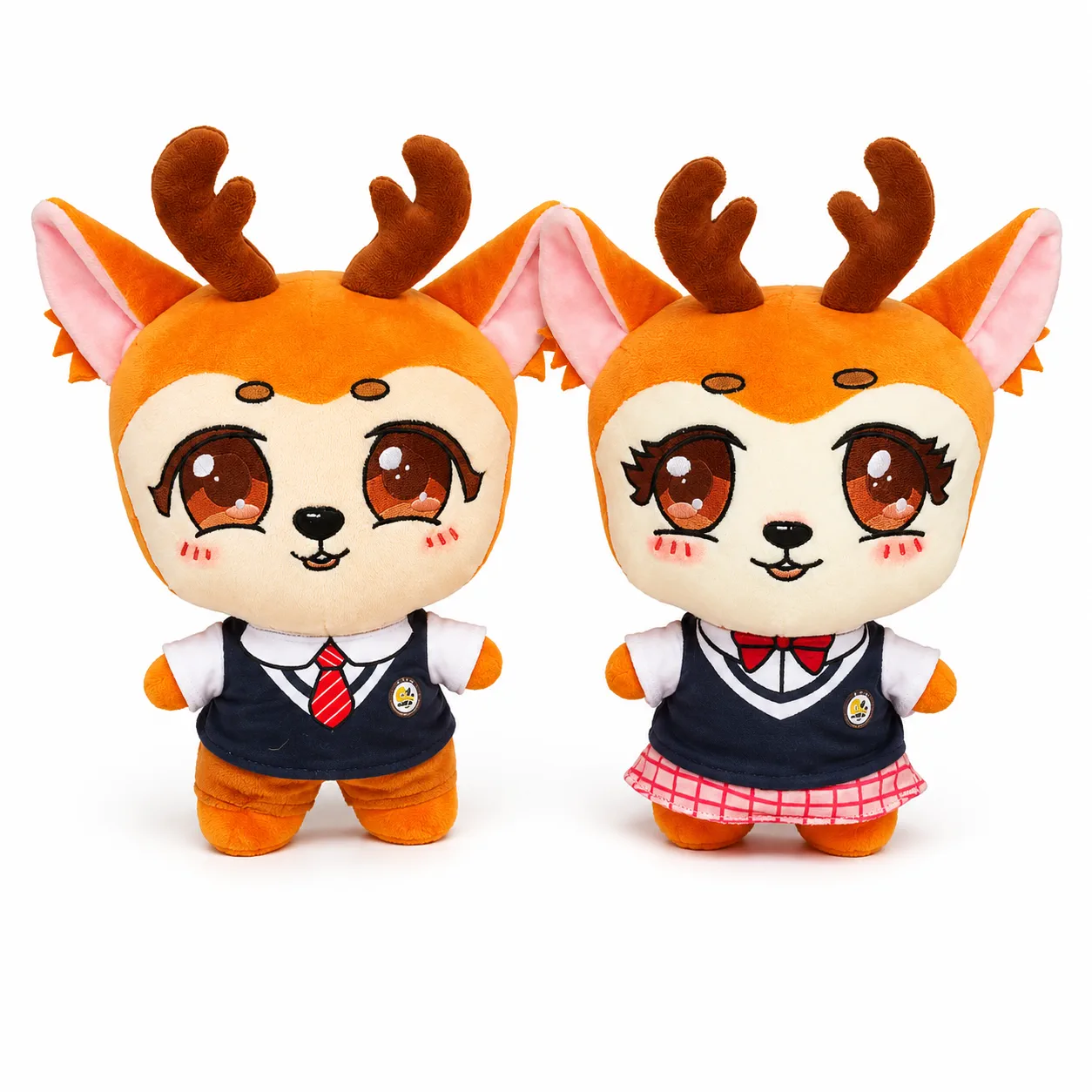
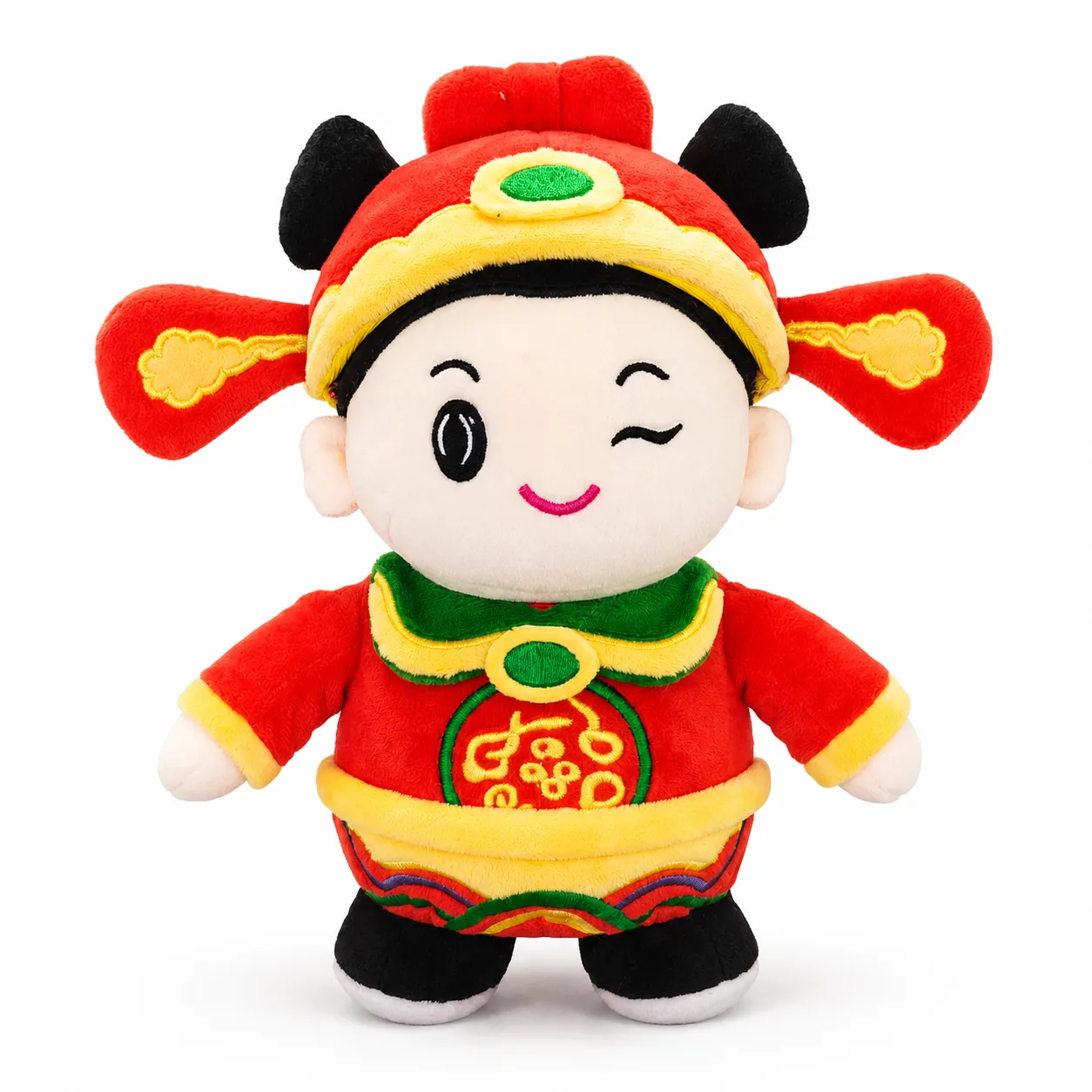
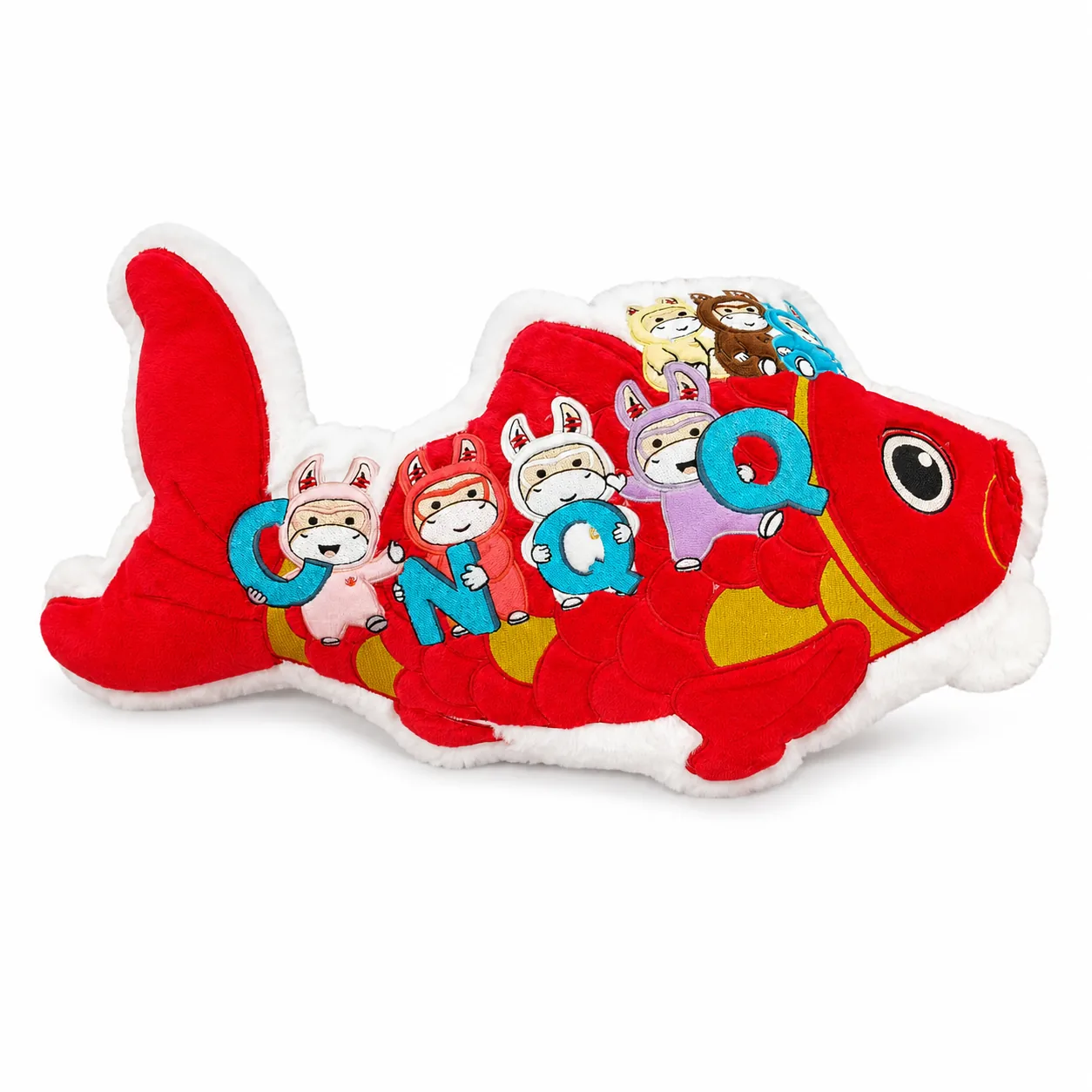
Use the plush photographs below to compare rounded silhouettes, embroidery, clothing, related character variants, layered costumes and wide shapes. Each requires different sample and production checks.
The first sample should answer the highest-risk physical questions
Another recurring situation starts when a buyer wants sampling to begin from a front view while the side and back interpretation, intended use, packaging and approval owner remain open. A sample can still be useful, but its purpose must be clear.
We treat the first physical sample as a decision tool. It should reveal the silhouette, proportion, balance, fabric behavior, facial placement, decoration scale, attachment method and pack volume that cannot be approved from a screen. It is not automatically a finished answer, and it should not silently convert every supplier assumption into the bulk-production standard.
Before sampling, the buyer and coordinator should agree on which questions the sample is meant to answer. After review, comments should be specific and consolidated by version. “Make it more premium” is not a production instruction. “Move the embroidered eye relative to the center seam” or “reduce the thickness of this sewn attachment while keeping its outline” gives a controlled direction.
Our plush sample review guide explains this approval logic in more detail. During supplier evaluation, we check whether the proposed team can keep that logic intact from the first sample through the approved reference.
Material and process choices need a reason, not a generic menu
A supplier may offer several fabrics, decoration methods and accessory options. The buyer still needs to know why one route fits the character and intended use. Material decisions affect surface appearance, seam behavior, detail clarity, filling and packing. Decoration choices affect line weight, color areas and how a face reads from a normal viewing distance.
We ask the proposed production partner to connect the choice to the design. If a fine feature needs embroidery, the scale and surrounding seam position matter. If clothing is removable or layered, attachment and bulk handling need to be defined. If a rigid or loose accessory is proposed, its use, connection and packing risk need review. If the destination or intended user creates a testing or labeling question, that requirement remains open until the buyer and qualified reviewer confirm the applicable scope.
This is also where supplier substitution needs control. A visually similar fabric name or component is not automatically an approved replacement. A change that affects appearance, touch, construction, function, packaging or commercial scope should return to the relevant approval owner.
Sample approval must connect to the bulk-production reference
The approved physical sample is important, but it should not stand alone. It works with the current written specification, artwork, material and color references, decoration files, components, labels, packaging instructions and recorded exceptions. Together they form the active production reference.
During evaluation, we ask how superseded files are removed from active use and how changes are recorded. If the buyer accepts a minor sample exception, it should be written down. If a later change affects pattern, proportions, fabric, decoration, attachment or pack fit, the team should decide whether new physical evidence is required before production.
Quality control then checks the approved priorities. The relevant checkpoints depend on the actual design and scope. They may include product identity, silhouette, facial placement, seam and attachment condition, decoration clarity, filling, labels, quantity, pack-out and carton marks. Specific tolerances, sampling plans, tests or acceptance levels must come from current project requirements and qualified review; they should not be invented for a general article.
A workable supply route names the responsible party, approval reference and escalation path for each handoff.
Packaging and delivery are part of the supplier evaluation
Packaging is not a decision to hide until finished goods are ready. The physical sample affects bag, card, insert or box dimensions. Clothing, long ears, rigid parts or delicate embroidery may change protection and orientation. Retail presentation, event distribution and e-commerce fulfillment can require different information.
The evaluation should name who prepares packaging artwork, who confirms product dimensions, who assembles the individual pack, who supplies labels or barcodes and who checks pack-out. Master-carton information and the delivery handoff must use the same approved product and pack assumptions as the quotation.
Destination, freight method, customs documents, Incoterm scope, duties and taxes are confirmed for the current project. Missing inputs and the responsible party are recorded before the delivery plan is approved.
AIYYANG's role must remain clear
AIYYANG supports product development, supplier coordination and quality control. For a real plush project, we can review the brief, organize specification questions, compare defined supplier scope, coordinate sampling, maintain approval records and connect quality and packing checks to the current reference.
That role is valuable only when it is described honestly. We do not convert coordination into a claim that AIYYANG owns every factory, machine or production line. Supplier identity, production site, capacity, availability and responsibility are verified for the actual project. When those facts are not yet confirmed, they remain open questions.
This clarity also helps the buyer. The buyer knows whom to ask about artwork, sample changes, material approval, bulk reference, inspection results, packaging files and delivery handoff. A transparent responsibility map is more useful than a broad promise.
Common mistakes buyers make when evaluating a plush supplier
- Comparing quotations that use different artwork, size or packaging assumptions.
- Choosing from a unit price before confirming what the quote excludes.
- Treating a fast “yes” as proof that the character has been reviewed for construction.
- Starting a sample without naming the questions it must answer.
- Sending revision comments through several channels without one current version.
- Approving only a front photo and ignoring side, back, balance or attachments.
- Changing fabric, size, pattern and embroidery together without tracking the effect.
- Assuming a sample approval also approves labels, packaging and delivery scope.
- Using “manufacturer” as a substitute for identifying the actual production and coordination roles.
- Accepting fixed MOQ, price, timing, certification or capacity claims that are not tied to a current project review.
These mistakes are preventable. The solution is not a longer supplier list. It is a controlled brief, comparable scope and clear approval ownership.
A practical production-partner checklist
Before selecting a route, ask for evidence or a direct answer to these questions:
- Does the team identify the active artwork version and open design decisions?
- Can it explain how the character will become a three-dimensional pattern and sample?
- Are proposed materials and decoration choices connected to the design?
- Is the sample purpose, revision owner and approval method clear?
- Does the quotation show included work, exclusions and assumptions?
- Is the approved bulk reference defined as more than one image in a chat?
- Are material or process changes returned for approval?
- Is inspection responsibility tied to the current specification and sample?
- Are labels, packaging, carton preparation and delivery handoffs assigned?
- Are production-site facts, timing, MOQ, cost and compliance claims verified for this project?
If several answers are vague, the buyer needs more information before supplier selection. If the scope is clear, the commercial comparison becomes more meaningful.
Direct answers about production-partner evaluation
Is AIYYANG a plush toy factory?
AIYYANG is a merchandise development, supplier coordination and quality-control team. The production supplier, site and responsibility arrangement are identified for the actual project instead of being implied by a general marketing label.
Can the lowest unit price identify the best supplier?
No. Materials, decoration, sample work, packaging, inspection, exclusions and delivery handoff must be aligned first. Prices are only comparable when they refer to the same defined scope.
How is the approved sample used during production?
The approved physical sample works with the current written specification, artwork, components, packaging instructions and recorded exceptions. Together they guide production and the relevant quality checks.
Evaluate the controls before choosing the label
AIYYANG helps brands, IP owners, game companies, sports clubs, retail teams and event companies organize custom merchandise development, supplier responsibilities and quality references. For a plush project, our first task is to make the brief, open decisions and handoffs visible.
Send a plush project brief, contact us through WhatsApp, or email aiyyang866@gmail.com. Include the current files and any supplier quotation you want reviewed. We will begin with the decisions that must be aligned before a production route can be compared responsibly.
Send the current plush files and open decisions
We will separate confirmed requirements from assumptions before comparing a production route.
Send a plush project brief
See how AIYYANG reviews artwork, samples, quotation scope, supplier responsibilities, QC, packaging and delivery before matching a plush project in China.