
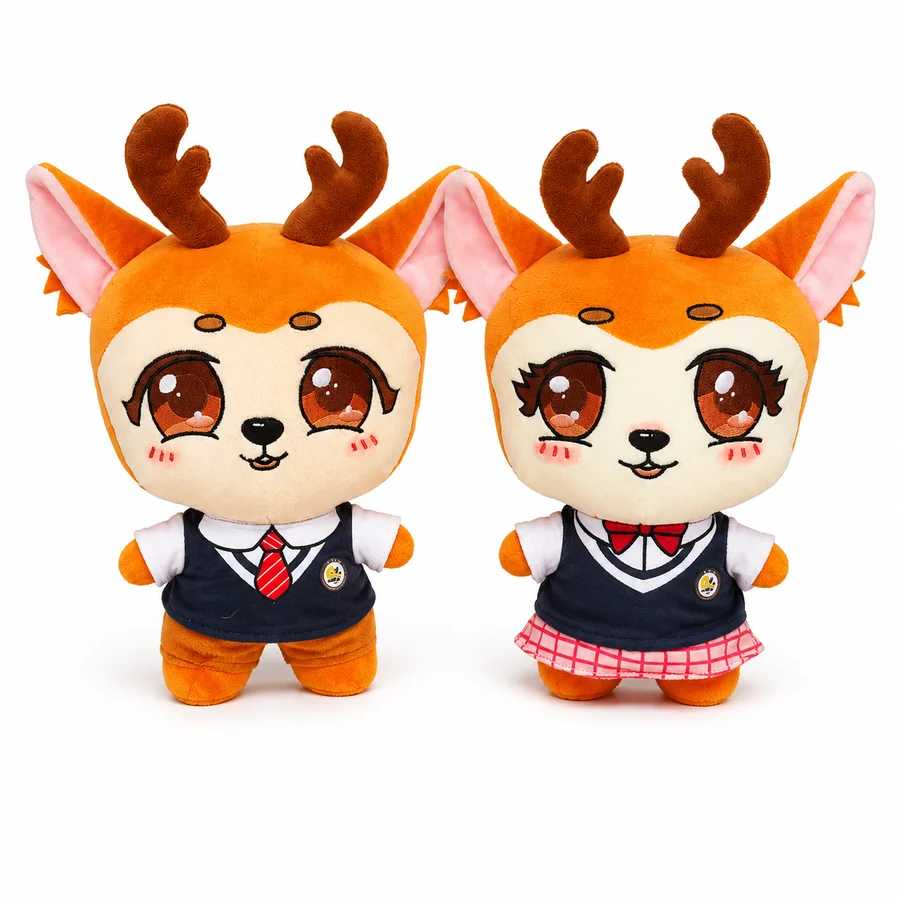
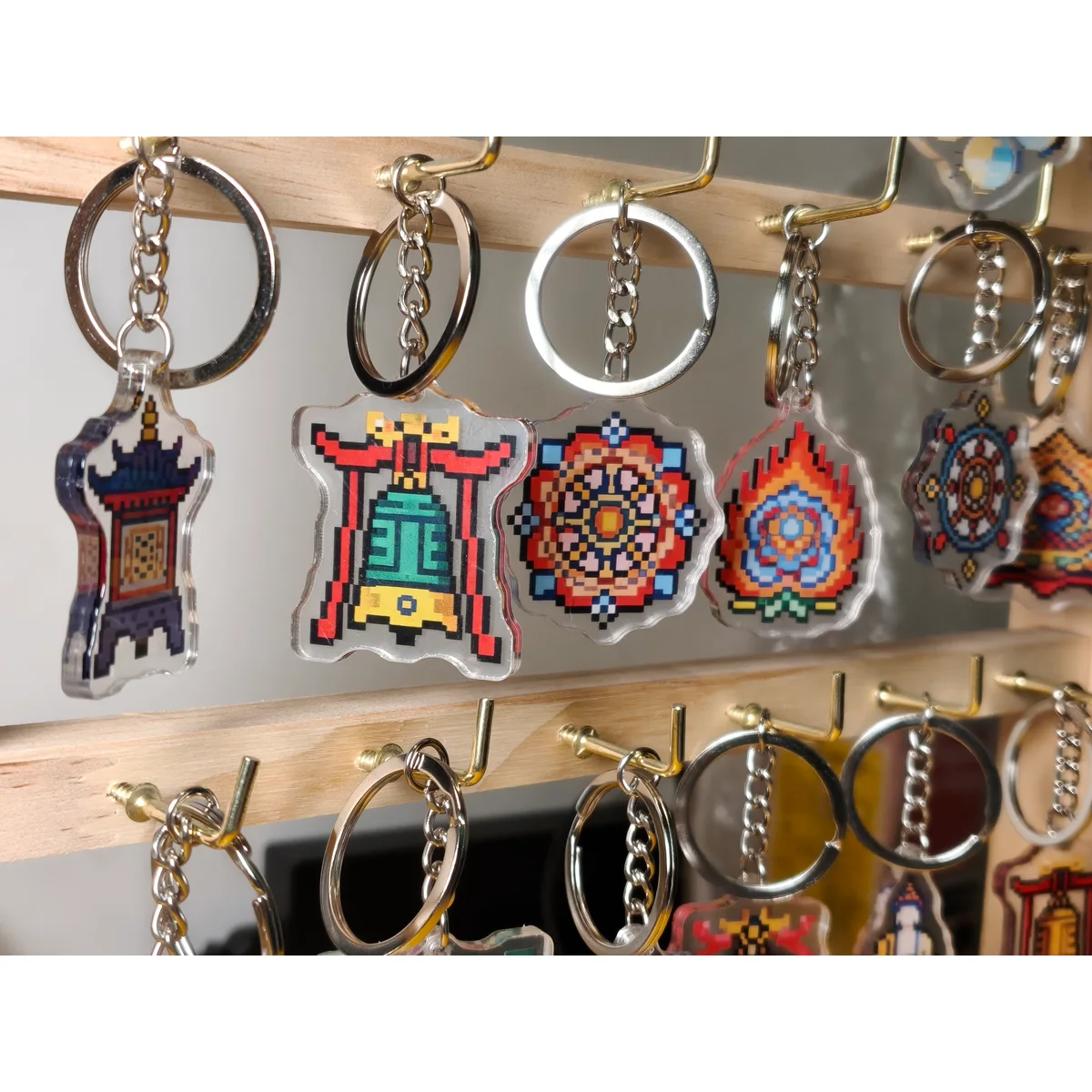
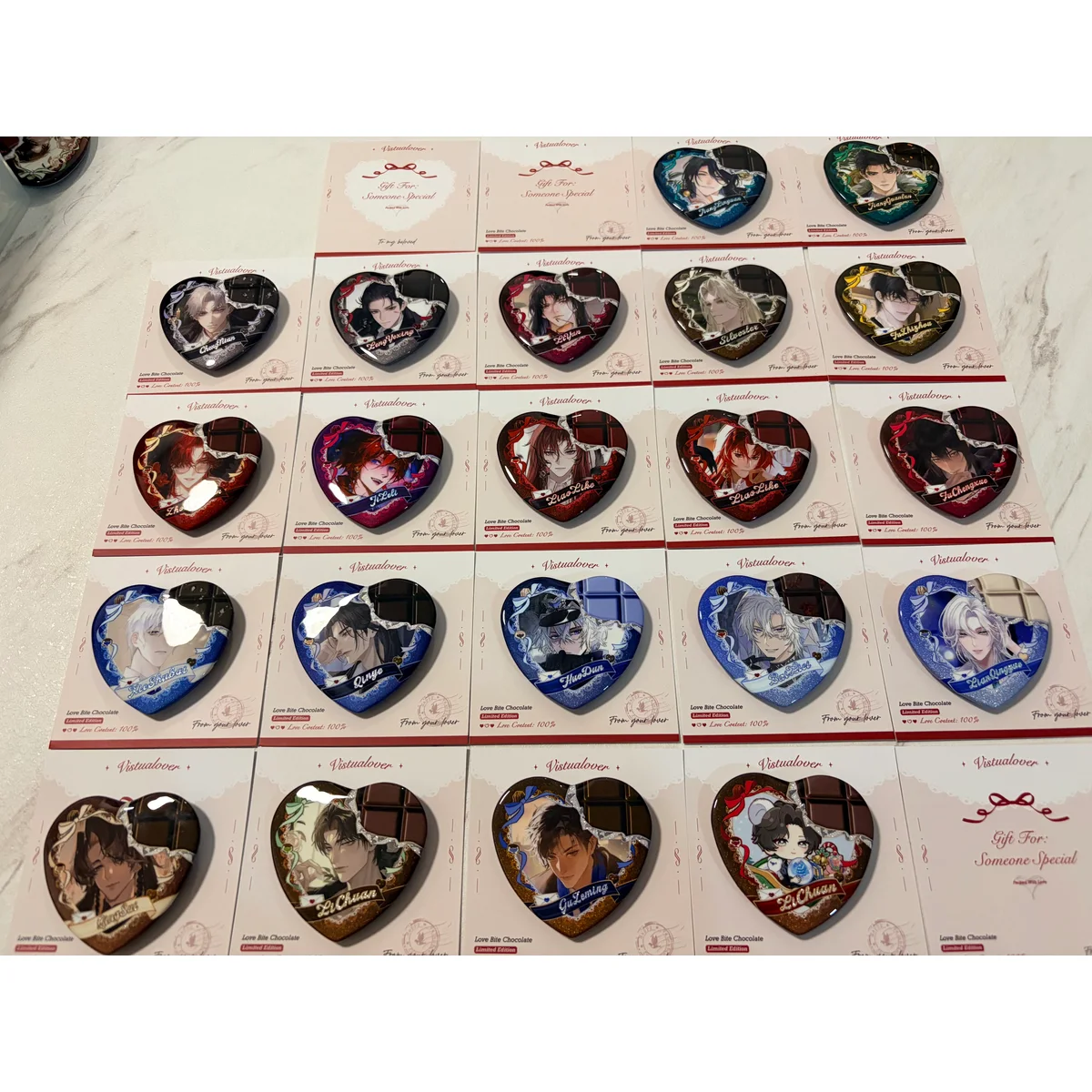
This matters when one launch contains plush, acrylic items, badges and packaging. These products do not move through the same proof, sample or production route. A buyer may want one release date and one visual identity, but forcing every category into a single generic workflow creates gaps. Our role at AIYYANG is merchandise development, supplier coordination and quality control: we keep the product-level workstreams clear and connect them to one buyer-approved project plan.
One collection can contain several different sourcing jobs
A recurring buyer situation begins with a list rather than a finished specification. The list may say character plush, acrylic keychains, badges and individual retail packs. It looks like one order because every item uses the same IP and will launch together. From a sourcing perspective, however, it contains several different jobs.
The plush item needs decisions about shape, fabric, embroidery, sewn parts and how a three-dimensional character should be interpreted. Acrylic artwork needs clear and printed areas, a cut outline, hardware and viewing direction. A badge has its own surface, shape, attachment and backing-card decisions. Packaging cannot be completed from artwork alone because it must fit the approved physical products.
We therefore separate the collection into controlled workstreams. Each product has a current specification and approval path. The collection has a shared matrix for character version, color references, legal or label content, target presentation, launch priority and delivery status. This structure lets a buyer coordinate one release without pretending all products behave alike.
What belongs in a sourcing responsibility map
A responsibility map is more useful than a list of supplier names. It records who prepares, checks, approves and hands off each part of the project. The exact roles vary, but the questions remain consistent:
- Who owns the current buyer artwork and identifies the active version?
- Who converts that artwork into the product-specific proof or specification?
- Who confirms materials, components, colors and packaging assumptions?
- Who reviews the physical sample and consolidates revision comments?
- Who records the approved reference for bulk production and QC?
- Who supplies labels, barcodes, warnings or other buyer-controlled content?
- Who confirms individual packing and carton information?
- Who decides whether products are consolidated or delivered separately?
- Who communicates changes, and who has authority to approve them?
We mark open items instead of allowing a supplier to guess. If a barcode is pending, it remains pending. If the buyer has not selected a packing format, quotations should state the assumption rather than quietly include the cheapest option. If a product needs market-specific testing or labeling, the target market and requirement must be confirmed for that product.
The map also shows dependencies. Packaging artwork may begin early, but final insert dimensions depend on an approved product. Carton planning requires the chosen individual pack. A common launch date may depend on the slowest unresolved approval, not the first supplier that finishes a sample.
Coordination is not the same as claiming every production site
Buyers sometimes use “sourcing agent,” “supplier,” “manufacturer” and “project manager” as if they describe the same role. They do not. A sourcing project should state which team develops the product specification, which specialist supplier performs a process, who reviews the result and who communicates with the buyer.
AIYYANG is positioned as a merchandise development, supplier coordination and quality-control team. We review the brief, organize missing decisions, coordinate suitable suppliers, keep versions aligned and connect approved references to packing and delivery planning. The production arrangement for a real project must be identified from current supplier information; it is not inferred from a marketing label.
This distinction lets a buyer ask the right questions: who is responsible for the sample, who holds the approved file, where packaging is assembled and who checks the finished product against the approval.
Our supply chain and quality-control page explains this role in more detail. It focuses on coordination and verification rather than facility ownership claims.
Artwork review happens at both collection and product level
One character can be adapted across materials, but the artwork cannot simply be copied into every product template. Collection-level controls may include the approved character version, logo, naming, color references and legal marks. Product-level proofs translate those controls into a physical format.
For plush, a fine line may become embroidery or require simplification. For acrylic, the same feature may remain printed but must work with the cut outline and clear areas. On a badge, the shape and attachment affect orientation. On packaging, the character art must coexist with product information, barcode space and the real dimensions of the packed item.
We identify which details must remain visually consistent and which need process-specific interpretation. The buyer approves the result in each medium. A shared master artwork does not replace product proofs, and a supplier proof does not authorize changes to the character identity without buyer approval.
Our merchandise development process shows how artwork review leads into prototype, approval, production reference and delivery planning. In a multi-supplier program, the same control logic runs across several product paths.
Samples answer different questions for different products
A sample is not a ceremonial step. It converts assumptions into observable evidence. Yet the evidence differs by product.
A plush sample can show silhouette, proportion, fabric behavior, embroidery placement, sewn attachments and pack volume. An acrylic sample can show print appearance, outline, hardware or base fit, edge condition and pack protection. A badge sample can show surface, shape, print or finish relationship, attachment and presentation card. A packaging sample tests fit, movement, closure, print placement and the opening experience with the real product.
We record what each sample is intended to approve. If a packaging mock-up is made before the physical product is final, it may approve graphic direction but not final fit. If an acrylic proof is approved but hardware is still open, that condition remains visible. This prevents a partial approval from being treated as approval of the whole SKU.
Comments should be consolidated by SKU and version. When a revision affects dimensions, connection points, packing or another workstream, the responsibility map identifies what must be reviewed again.
Version control connects approved samples to bulk quality checks
Multi-supplier programs create more files, not fewer. Each product may have artwork, cut or construction information, color references, components, labels, sample comments and packing instructions. A collection adds shared naming, launch and delivery information.
We keep a current product reference and a collection status view. Superseded files are not treated as active. The buyer's approval should identify the relevant version and any remaining exceptions. If a change occurs after sample approval, its impact is classified before the new version enters production.
Quality checks then use the approved product reference. Relevant checkpoints depend on the product and project; they cannot be replaced by a generic inspection slogan. The check may cover identity, appearance, assembly or function, quantity, pack-out and carton marks where those items belong to the approved scope. Requirements such as tolerances, tests or sampling plans need current project evidence and reviewer approval before they are stated.
The coordinator's value is not claiming that variation never occurs. It is keeping the acceptance reference, responsibility and escalation path clear enough that a mismatch can be identified and returned to the correct decision owner.
Packaging is a separate workstream with product dependencies
Packaging is often treated as the final decoration. In a mixed collection, it is also a coordination layer. It determines how SKUs are identified, protected, grouped, displayed and prepared for delivery.
We ask whether each item needs a sleeve, card, bag, insert, box or another approved format; who supplies the artwork; which product dimensions are final; how the customer opens or assembles it; and which labels or barcodes are buyer-provided. The chosen pack then affects carton count, weight, volume and handling information.
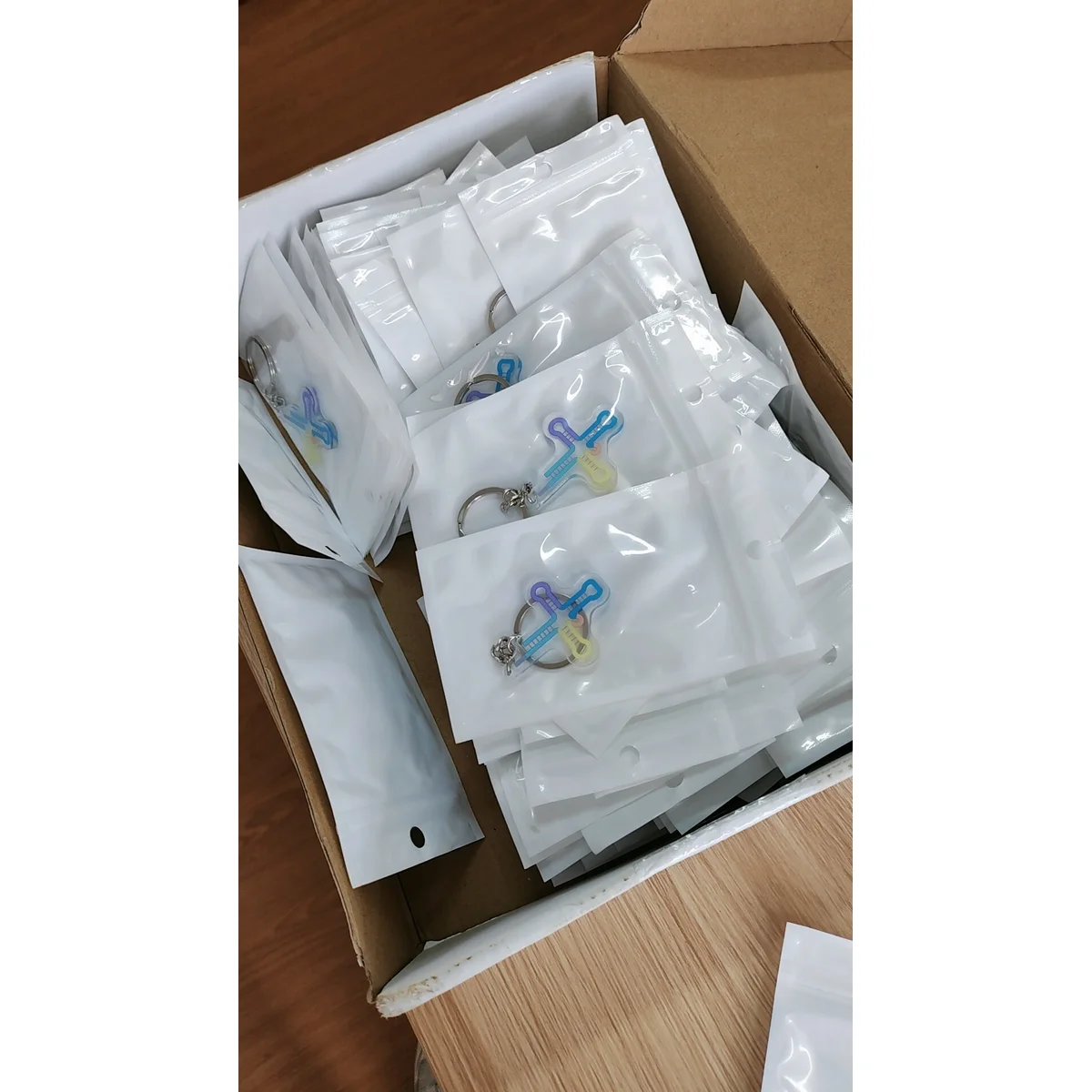
The real packed acrylic image on this page shows individually protected items placed in a carton. It supports the practical point that product protection and carton preparation must be connected. It does not establish a universal pack method. Plush, badges and acrylic items have different surfaces, shapes and movement risks, so their protection is decided from actual samples and sales channels.
When a collection will be sold as a set, the final assembly location and SKU-pairing responsibility must also be defined. A set cannot be controlled only by checking each component separately; the correct components, inserts, labels and quantities must come together in the approved presentation.
Consolidation or separate delivery is a buyer decision, not a default promise
Combining several products into one shipment may simplify receiving, but it can also hold ready items while another SKU is still unresolved. Separate delivery may protect a launch priority but changes the packing, documentation and freight scope. Neither option is automatically correct.
We wait for current readiness information, carton data, destination, launch priorities and logistics terms before recommending a path. The decision should answer:
- Which products are actually approved and ready?
- Must every SKU arrive together, or can the release be phased?
- Where will sets or retail packs be assembled?
- Are carton marks and shipping documents aligned across suppliers?
- What delivery responsibility has each quotation included?
- Which deadline is commercially important, and what remains unapproved?
Incoterm scope, customs documents, duties, taxes, carrier arrangements and destination requirements need project-specific confirmation. We do not turn them into general guarantees. Our task is to collect the relevant inputs and make the handoff visible to the buyer and the parties responsible for delivery.
Common sourcing mistakes we try to prevent
- Asking several suppliers to quote from different artwork versions.
- Comparing unit prices before aligning included and excluded work.
- Treating the total collection quantity as if every design has the same quantity logic.
- Starting packaging dimensions before the physical product specification is stable.
- Approving a visual sample without recording material, component or pack exceptions.
- Allowing revision comments to remain split across messages and files.
- Assuming one shared color will look identical on fabric, acrylic, metal and print.
- Leaving barcode, label, assembly or carton ownership undefined.
- Promising consolidation before product readiness and carton information are known.
- Using “sourcing agent” as a substitute for naming the actual responsibility at each handoff.
These mistakes are prevented by disciplined information, not by adding more suppliers. A smaller, controlled SKU plan can be more workable than a larger list with unclear specifications and approvals.
Direct answers about multi-supplier coordination
What is AIYYANG's role in a multi-supplier project?
AIYYANG is a merchandise development, supplier coordination and quality-control team. For an actual project, supplier roles and current production arrangements are identified in the responsibility map instead of being implied by a broad company label.
Can all products be consolidated into one shipment?
Possibly, after readiness, carton data, destination, launch priorities and logistics scope are confirmed. We do not promise consolidation before those project inputs are available.
What does AIYYANG need to start a sourcing review?
Send the SKU list, current artwork, sizes or use limits, design count, quantity ranges, packaging expectations, destination, launch priorities and open decisions. Existing supplier quotes or samples can also be included for scope review.
Give every product and handoff a clear owner
AIYYANG helps brands, IP owners, game companies, sports clubs, retail teams and event companies turn merchandise ideas into controlled physical-product programs. We coordinate product specifications, specialist suppliers, samples, quality references, packaging and delivery decisions without filling missing project facts with assumptions.
To review a mixed collection, send your project brief, contact us on WhatsApp, or email aiyyang866@gmail.com. Include the current SKU list and files. We will begin by showing which decisions are ready, which are open and who needs to approve the next handoff.
Send the current SKU list and open decisions
The first review identifies what is ready, what is missing and who needs to approve each handoff.
Send a mixed merchandise brief
See how AIYYANG maps product specifications, supplier responsibilities, samples, QC, packaging and delivery before coordinating a mixed merchandise program in China.